
Security Guard Deployment Time Standards: A 2026 Guide
Explore security guard deployment time standards for 2026. Learn how to meet benchmarks and improve response with real-time tracking. Get started today.
Table of Contents
- What Are Security Guard Deployment Time Standards?
- Deployment Time vs. Response Time: The Critical Difference
- The Real Benefits of Real-Time Security Tracking
- Emergency Security Guard Dispatch Services: What to Expect
- Security Guard Response Time Benchmarks Explained
- Legal and Licensing Requirements That Affect Deployment Speed
- How Technology Is Changing Security Guard Deployment
- Frequently Asked Questions
Last Updated: September 18, 2026
What Are Security Guard Deployment Time Standards?
Security guard deployment time standards are the defined benchmarks for how quickly a security provider can place a trained, licensed officer at a client site after a request is made. At Ranger Operation Services, we treat deployment time as a contractual commitment, not a marketing phrase, which is why our four-hour statewide deployment window anchors every dispatch decision we make.
Deployment Time vs. Response Time: The Critical Difference
Deployment time is the interval between a client request and an officer's first shift on site, measured in hours or days. Response time is the interval between an alarm or incident and an officer's arrival, measured in minutes. Confusing the two is the single most common mistake we see in security contracts.
| Metric | What It Measures | Typical Range | Contract Risk |
|---|---|---|---|
| Deployment time | Request to first shift | Hours to days | Unstaffed coverage gaps |
| Response time | Alert to arrival | Minutes | Liability after an incident |
| Shift fill rate | Scheduled vs. covered posts | Percentage | Chronic understaffing |
| Post-deployment audit | Performance after go-live | Quarterly | Unnoticed compliance drift |
The Real Benefits of Real-Time Security Tracking
Real-time tracking tools let supervisors see officer location, check-in status, and incident logs as they happen rather than in a weekly report. For property managers, the benefits of real time security tracking come down to three things: faster correction of problems, documented proof of coverage, and lower exposure when an incident becomes a legal matter.
How Live Status Updates Reduce Liability and Improve Accountability
Live status updates create a timestamped record of every patrol, check-in, and incident. When a slip-and-fall claim or a break-in dispute reaches an insurer or a court, that record is the difference between a defensible position and a settlement.
Emergency Security Guard Dispatch Services: What to Expect
Emergency security guard dispatch services are the same-day or same-shift staffing response used when a site faces an immediate threat, such as a trespass incident, a labor dispute, a termination with a credible retaliation risk, or a sudden vacancy left by a no-show officer. Expect a legitimate provider to confirm officer availability, dispatch from the nearest coverage zone, and give you a named point of contact for the duration of the assignment.
The Emergency Dispatch Sequence, Step by Step
A defensible emergency deployment follows a fixed sequence. Ask any provider to walk you through theirs before you sign:
- Intake and threat triage. The dispatcher logs the request, the site address, the threat type, and whether the post is armed or unarmed. Armed posts take longer because the officer must hold the correct license class.
- Roster query by coverage zone. The dispatcher filters the licensed roster by distance to the site, current shift status, and remaining legal hours in the workweek.
- Availability confirmation. The officer is contacted directly and confirms the assignment. A verbal "we'll find someone" is not confirmation.
- Post orders delivery. The officer receives site-specific post orders, access points, patrol routes, escalation contacts, before arriving, not after.
- Dispatch and check-in. The officer clocks in through a mobile app or dispatch call, and the client receives a named point of contact for the duration of the assignment.
- Relief planning. The dispatcher begins sourcing relief coverage for the next shift before the first officer's shift ends, so the emergency does not become a recurring gap.
Emergency Deployment vs. Administrative Deployment
This is the distinction most contracts blur. Emergency deployment is measured in hours and applies to a specific, time-bound threat. Administrative deployment, hiring, onboarding, licensing verification, and post-order development for a new site, is measured in days to weeks and cannot be compressed by paying more. A provider that promises a 24-hour administrative deployment for a new armed post is either cutting a legal corner or planning to staff it with an officer who is not yet qualified for that post.
| Deployment Type | Trigger | Realistic Timeline | What Sets the Clock |
|---|---|---|---|
| Emergency same-shift | Incident, vacancy, credible threat | Hours | Roster depth, coverage zone, license class |
| Expedited new post | New contract, urgent opening | 1-3 days | Post orders, site walk, uniform and equipment issue |
| Standard new post | Scheduled contract start | 1-3 weeks | Onboarding, license verification, training |
| Armed post activation | Any armed assignment | Add 3-10 days | License class verification, firearm qualification records |
What to Have Ready Before You Call
Emergency dispatch moves faster when the client side is prepared. Have these items available before the first call:
- Site address and after-hours access instructions
- Post type (armed or unarmed) and any client-mandated equipment
- Primary and secondary on-site contacts with phone numbers
- Known threats, prior incidents, or active legal matters involving the site
- Insurance certificate requirements your landlord or lender imposes
Security Guard Response Time Benchmarks Explained
Security guard response time benchmarks vary by property type and threat profile, not by a single industry-wide number. A gated community, a construction yard, and a retail floor have different acceptable windows, and a provider that quotes one figure for all three is not measuring anything.
Industry Benchmarks for Different Property Types
Use these ranges as planning targets, and confirm the actual commitment in your contract:
- Commercial office and HOA gatehouse: on-site officer during posted hours, mobile patrol backup within the hour
- Construction sites: overnight patrol coverage, with same-day deployment for theft spikes
- Retail and loss prevention: officer on floor during operating hours, immediate dispatch for organized retail crime events
- Medical and compliance-sensitive facilities: armed transport and chain-of-custody documentation on a scheduled, not reactive, basis
Legal and Licensing Requirements That Affect Deployment Speed
Licensing and certification mandates set the floor on how fast any provider can deploy. An officer cannot legally work a post before completing required training and holding a valid state license, and no amount of operational pressure changes that. This is the single biggest reason deployment timelines vary so widely between providers and between post types.
License Classes and What They Cost You in Time
Most states tier security officer licenses by the duties the officer may perform. The two most common tiers are an unarmed officer license and an armed officer license, and the armed tier almost always requires additional training hours, a firearm qualification, and a separate application or endorsement. The practical effect on deployment speed is straightforward:
- Unarmed posts can typically be filled from a larger pool of licensed officers, so same-day and next-day deployment is realistic for standard commercial, HOA, and construction assignments.
- Armed posts draw from a smaller pool, and the provider must verify that the specific officer holds the correct endorsement and current qualification records. That verification step alone can add several days to a new-post deployment.
- Specialty posts, medical transport, chain-of-custody evidence handling, K-9, or bike patrol, may carry additional training or equipment requirements that further narrow the eligible roster.
Labor Law Constraints on Shift Coverage
Labor law compliance adds a second constraint. Maximum working hours, mandated rest breaks, and overtime rules limit how many consecutive shifts an officer can cover, which is why a provider cannot simply "find someone" when a scheduled officer calls out. Three rules do most of the work here:
- Weekly hour caps. Many states cap the hours a security officer may work in a workweek before overtime applies, and some cap total hours outright. An officer already near the cap cannot legally cover an emergency shift.
- Mandatory rest between shifts. Minimum rest periods between shifts mean a night-shift officer cannot always be pulled into a day shift the next morning, even if they volunteer.
- Overtime and scheduling rules. Overtime pay obligations and predictive scheduling rules in some jurisdictions affect how far in advance shifts must be posted and how call-outs are backfilled.
What to Verify Before You Sign
Before you sign, verify these items in writing:
- The provider holds a current state license and can produce the number
- Officers carry the correct license class for armed or unarmed posts
- Firearm qualification records are current for every armed officer assigned to your site
- Insurance coverage is documented, including general liability limits
- The provider can name the specific officers assigned to your post, not just a headcount
Ranger Operation Services holds FL #B32001502, staffs state-certified Class D and G officers with Level IV training, and carries $5M in general liability insurance. Ask any provider for the equivalent documentation before you commit.
How Technology Is Changing Security Guard Deployment
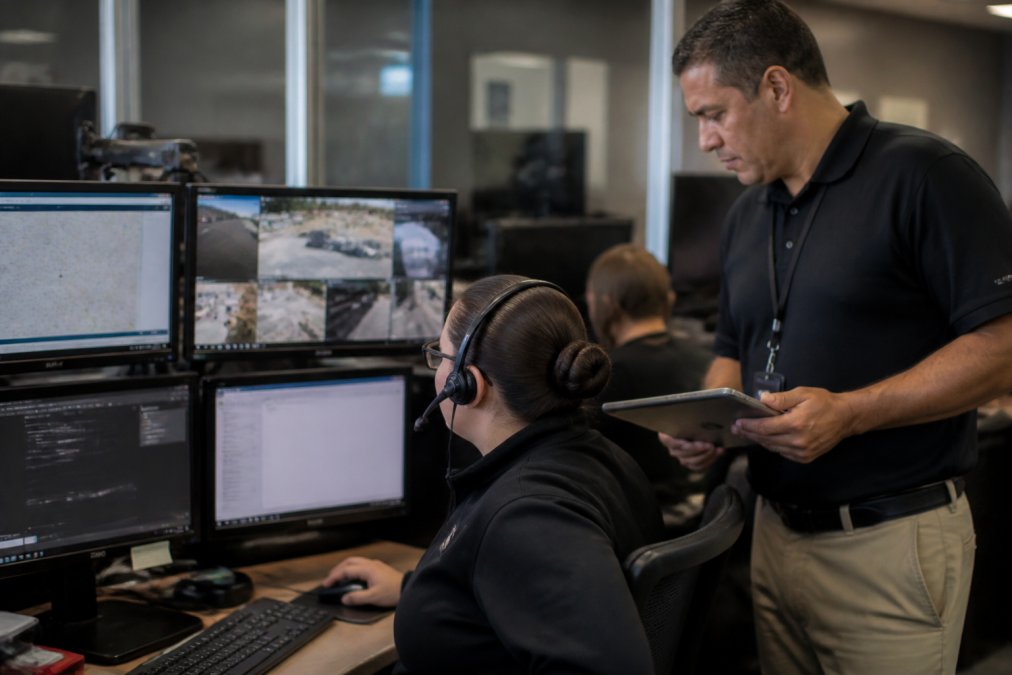
Technology has shifted deployment from a phone-and-paper process to a tracked, auditable workflow. Booking platforms, live status dashboards, and mobile check-in tools compress the time between request and coverage, and they give clients visibility that traditional firms simply did not offer.
Standardized KPIs for Deployment Success
- Time to first shift, hours from request to officer on site
- Shift fill rate, percentage of scheduled posts actually covered
- Incident response time, minutes from alert to officer arrival
- Post-deployment audit score, quarterly review of compliance and performance
Post-deployment performance monitoring is where most contracts quietly fail. Coverage looks fine in month one and drifts by month six. Quarterly audits catch the drift before it becomes a liability event.
Frequently Asked Questions
What is the industry standard for emergency security guard deployment?
The industry standard for emergency security guard deployment varies by provider and location, but a four-hour deployment window is widely considered competitive. Many firms aim for same-day deployment for urgent needs. Factors like guard availability, licensing requirements, and site-specific training can extend timelines. For critical incidents, some providers offer expedited dispatch with officers already cleared for immediate assignment.
How does real-time tracking improve security deployment times?
Real-time tracking allows dispatchers to see exactly where guards are and their current status, so they can assign the nearest available officer to a new site. This reduces idle time and eliminates guesswork. Live updates also let supervisors adjust schedules on the fly, ensuring coverage gaps are filled faster. The result is tighter coordination between dispatch and field operations, which directly shortens deployment duration.
What factors influence the speed of security guard dispatch?
Key factors include guard availability in the area, the time of day, licensing and certification requirements, and the complexity of the site's risk assessment. Pre-assignment training and onboarding also affect how quickly a guard can be deployed. Providers with a larger pool of licensed officers and a centralized dispatch system can typically mobilize faster, especially for emergency requests or same-day coverage.
Why is a four-hour deployment window considered a competitive standard?
A four-hour window balances urgency with operational reality. It gives security firms enough time to verify licensing, assign a qualified officer, and conduct a basic site briefing, while still addressing most client emergencies. For property managers and construction sites, waiting longer can mean increased risk of theft, trespassing, or liability. Providers that consistently meet this benchmark demonstrate reliable deployment logistics and workforce readiness.