Armed Bodyguard Services: Hiring Guide
Learn how to hire armed bodyguard services with confidence.
Table of Contents
- What Armed Bodyguard Services Include
- Armed vs Unarmed Security Guards: When Each Makes Sense
- Florida Class G Security License Requirements and Training Standards
- How to Vet and Verify Armed Security Personnel
- Deployment Speed and Emergency Response Capabilities
- Legal Liability, Insurance, and Compliance Obligations
- Selecting the Right Armed Bodyguard Service for Your Needs
- Frequently Asked Questions
Last Updated: October 1, 2026
What Armed Bodyguard Services Include
Armed bodyguard services combine trained security personnel, threat assessment, rapid response capabilities, and legal compliance into a coordinated protection strategy tailored to your specific risk profile.
Armed bodyguard services deploy licensed, armed security professionals for executive protection, site security, loss prevention, and emergency response. This includes threat evaluation, real-time monitoring, incident documentation, and post-event reporting. Armed personnel carry firearms and receive specialized training in threat recognition, de-escalation, tactical response, and legal use-of-force protocols.
What separates professional armed bodyguard services from basic security is the depth of training and the authority to intervene directly in threatening situations. Armed guards can make split-second decisions about physical intervention, whereas unarmed personnel must rely on communication and evacuation procedures. This distinction matters enormously when response time is measured in seconds.
Core components include 24/7 dispatch availability, named supervisory oversight, real-time tracking, incident reporting with photographic documentation, and law enforcement coordination. Operational transparency, knowing exactly where your security detail is and what they're doing, eliminates guesswork that traditional security contracts create.
Armed vs Unarmed Security Guards: When Each Makes Sense
The choice hinges on threat level, regulatory environment, and specific incidents you're trying to prevent. The question is matching the right tool to your actual risk.
Unarmed guards excel at access control, customer interaction, and routine patrol for retail loss prevention, event management, and property monitoring. They check credentials, manage foot traffic, identify suspicious behavior, and call for armed response when needed. Many commercial properties operate successfully with unarmed personnel because the primary goal is visibility and early warning, not armed intervention.
Armed security personnel become necessary when your risk profile includes active threats, high-value asset protection, or situations where seconds matter. Construction sites, medical marijuana treatment centers, executive protection assignments, and sensitive material facilities all benefit from armed response capability. An armed guard can stop an active threat immediately rather than waiting for police response.
The legal and operational differences are substantial. Armed guards require state certification (in Florida, Class G license for armed security), firearms training, and often higher liability insurance. They operate under stricter use-of-force rules and must document every incident with precision. Unarmed guards have lower licensing requirements but are limited to observation and communication.
A practical approach: deploy unarmed personnel for routine operations, then maintain armed response capability through a provider that can mobilize within hours. This hybrid model provides cost efficiency for daily operations and rapid armed response when situations escalate.
Florida Class G Security License Requirements and Training Standards
In Florida, armed security personnel must hold a Class G security license issued by the Department of State, Division of Licensing. Deploying an armed guard without proper licensing is a criminal offense.
Class G licensure requires applicants to be at least 18, hold a high school diploma or GED, pass a fingerprint background check, and complete a 40-hour state-approved armed security course covering firearms handling, legal authority, use-of-force law, de-escalation, and incident documentation. Applicants must then pass a written exam and practical firearms qualification test.
Professional armed security providers typically require additional training beyond Class G certification. Level IV firearms instruction includes advanced threat assessment, tactical movement, medical response, and scenario-based decision-making.
The licensing process takes 4-6 weeks from application to approval.
Class G licensees must complete 20 hours of continuing education every two years.
How to Vet and Verify Armed Security Personnel
Verifying credentials is non-negotiable when hiring armed bodyguard services. A single unqualified guard creates liability far exceeding any savings from cutting corners.
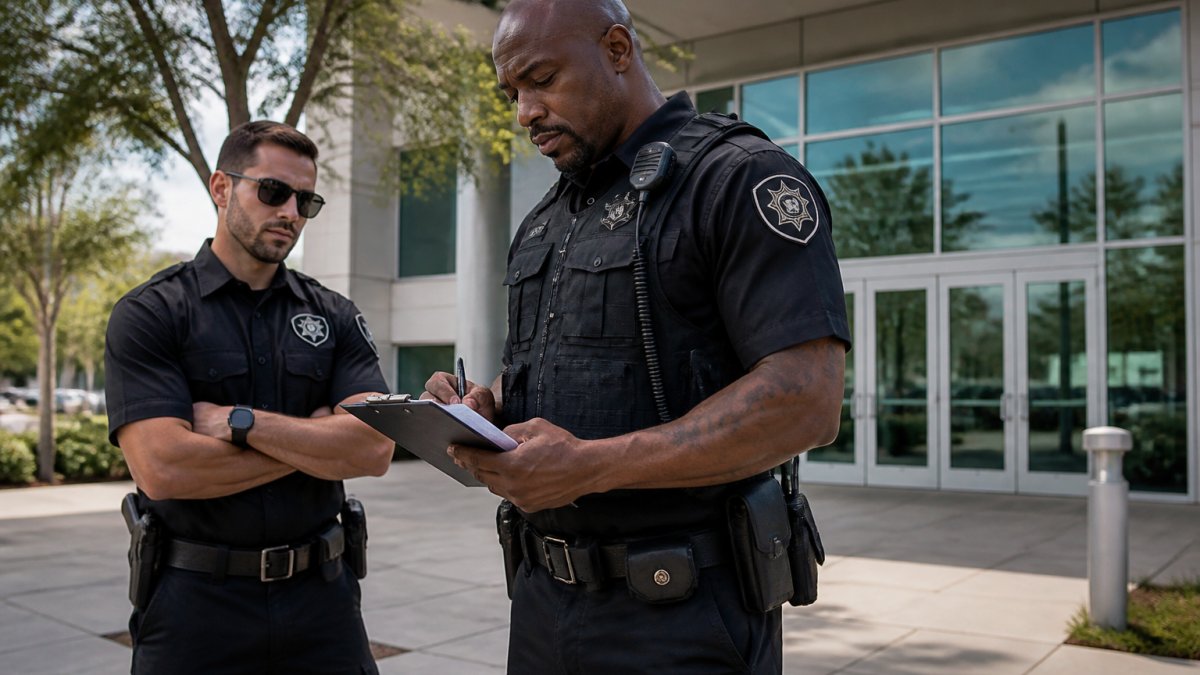
Request proof of current Class G licensure from the Florida Department of State's online licensing database. If a provider cannot produce current, verifiable licensure for every armed personnel assigned to your account, stop immediately. This is the baseline requirement.
Examine the background check process. Ask about disqualifying factors screened: felony convictions, domestic violence history, substance abuse, and financial instability. Request a summary of their vetting framework.
Verify firearms training credentials independently. Ask for specific course names, issuing organizations, and dates completed. Level IV instruction should come from recognized providers.
Request references from existing clients with similar risk profiles. Talk to at least three current clients about their experience with the guard and the provider's supervision model.
Review anonymized incident reports from past deployments. Look for clear documentation, appropriate de-escalation, and proper law enforcement coordination.
Deployment Speed and Emergency Response Capabilities
Response time separates effective armed bodyguard services from slow, reactive ones.
Ranger Operation Services guarantees deployment within four hours statewide with 24/7 dispatch support. This requires maintaining a distributed network of on-call personnel, advanced dispatch technology, and rapid mobilization commitment. Not every provider can deliver this level of readiness.
The mechanism matters as much as the speed. A provider with a mobile app that shows real-time tracking of dispatch and personnel location offers transparency and accountability. You should be able to see exactly where your security detail is, when they're arriving, and whether they're on-site.
Emergency response capability also includes coordination with local law enforcement. Armed bodyguard services should have established relationships with local police departments and clear protocols for when to call 911, how to brief arriving officers, and how to secure the scene. A guard who doesn't know how to properly hand off a situation to police creates confusion and potential liability.
Legal Liability, Insurance, and Compliance Obligations
Deploying armed security personnel creates significant legal exposure if not managed properly. Understanding your liability and ensuring the provider carries appropriate insurance is critical.
The provider should carry General Liability insurance, with coverage extending to armed personnel. Ask to see the certificate of insurance and verify that your organization is named as an additional insured. This protects you if a guard injures someone or damages property during an assignment.
Beyond insurance, you need to understand your own legal obligations. If you hire armed security personnel, you're responsible for ensuring they're properly licensed and trained. If an improperly credentialed guard injures someone, your organization can face criminal charges, not just civil liability.
Use-of-force incidents create particular legal complexity. Armed guards operate under Florida's use-of-force statutes, which define when force is legally justified. A guard who uses excessive force, even with good intentions, can create criminal liability for themselves and potentially for your organization.
For specialized facilities like medical marijuana treatment centers, compliance obligations extend beyond general security law. Chain-of-custody documentation, controlled substance handling procedures, and regulatory reporting all intersect with armed security operations.
Request that the security provider provide written protocols for your specific use case. These should cover threat assessment procedures, incident response, evidence preservation, law enforcement coordination, and documentation requirements. Written protocols create clear expectations and reduce the chance of misunderstanding during a critical moment.
Selecting the Right Armed Bodyguard Service for Your Needs
Choosing an armed bodyguard service requires matching provider capabilities to your actual risk profile and operational requirements.
Start by defining your specific need. Are you protecting executives traveling between locations? Securing a construction site from theft and loitering? Managing access control at a sensitive facility? Each scenario has different requirements. Executive protection demands personnel trained in threat recognition and tactical movement. Construction site security emphasizes visible deterrence and rapid response to trespassing. Medical marijuana facility security requires specialized knowledge of compliance documentation and chain-of-custody procedures.
Evaluate the provider's experience in your specific industry. A provider with extensive retail loss prevention experience may not understand the regulatory environment of a medical marijuana treatment center. Ask for case studies or client references from organizations similar to yours.
Assess the provider's technology infrastructure. Can they provide real-time tracking of personnel? Does their booking system integrate with your existing operations? Are incident reports available digitally with photographic documentation? Modern armed bodyguard services should operate with transparency and efficiency.
Review their personnel retention and training investment. High turnover among security personnel creates inconsistency and reduces institutional knowledge about your specific site.
Ask directly about their approach to client relationships. Will you have a named supervisor who knows your facility and your specific concerns? Or will you get whoever is available that day? Ranger Operation Services assigns a named regional supervisor to every client account, creating accountability and continuity.
Finally, compare the total cost of ownership, not just the hourly rate. Request detailed quotes that break down personnel costs, supervision, technology access, and emergency response fees.
Selecting armed bodyguard services requires balancing speed, credentials, compliance, and cost. The right provider delivers trained, licensed personnel with rapid response capability, transparent operations, and accountability for results. Ranger Operation Services combines all of these elements, 4-hour statewide deployment, 500+ licensed officers with Level IV training, a proprietary mobile app for real-time tracking, and a named regional supervisor for every client account.
Frequently Asked Questions
What qualifications and licenses do armed bodyguards need in Florida?
Armed bodyguards in Florida must hold a Class G security license issued by the Florida Department of State, Division of Licensing. Class G licenses specifically authorize armed security work. Officers must complete state-mandated firearms instruction, pass background checks, and have Level IV training.
How quickly can armed bodyguard services deploy for emergency situations?
Deployment speed varies by provider and location. Response time depends on your property's distance from the provider's base, current officer availability, and whether you have a standing contract.
What's the difference between armed and unarmed security guards?
Armed security guards carry firearms and are trained in weapons handling, threat escalation, and armed response protocols. They cost more but provide visible deterrence and capability to respond to violent threats. Unarmed security guards focus on access control, surveillance, and incident documentation without firearms authority. Your choice depends on facility risk level, industry requirements (medical marijuana facilities often mandate armed transport), local regulations, and threat assessment findings.
How do I verify that an armed bodyguard service is legitimate and properly insured?
Request proof of Florida Class G licenses for all assigned officers, verify current General Liability insurance, and confirm the company's business license and registration. Legitimate providers maintain transparent vetting processes, allow background verification, and provide documentation of officer training certifications and firearms qualifications.