
Best Security Guard Companies for Retail in 2026
Compare the best security guard companies for retail in 2026. Learn how to choose a provider that reduces shrink and improves loss prevention. Find.
Table of Contents
- How We Evaluated Retail Security Providers
- Ranger Operation Services: Best for Rapid Deployment and Tech-Forward Retail Security
- Champion National Security: Best for Consistent On-Site Staffing
- Guardian Integrated Security: Best Hybrid Model for Cost-Conscious Retailers
- Fast Guard Service: Best for Temporary and Emergency Coverage
- Armed vs Unarmed Security Guards for Retail: Which Do You Need?
- Retail Security Guard Responsibilities Checklist: What to Demand From Your Vendor
- How to Improve Commercial Property Security With a Vendor Vetting Process
- Frequently Asked Questions
Last Updated: September 8, 2026
How We Evaluated Retail Security Providers
Shrinkage and organized retail crime are line-item losses that erode margin daily. The best security guard companies for retail must integrate with your loss prevention strategy and provide verifiable reporting, which is why we evaluated security guard companies against a strict rubric. At Ranger Operation Services, we evaluated providers against a strict rubric prioritizing deployment speed, guard certification, and patrol verification technology.
A security program is only as good as its weakest shift. We looked for firms offering licensed and bonded personnel, 24/7 dispatch, and clear service level agreements. The cheapest hourly rate often leads to the highest turnover and weakest incident reports, creating liability. Providers below were scored on retail-specific challenges like merchandise recovery, access control, and emergency response.
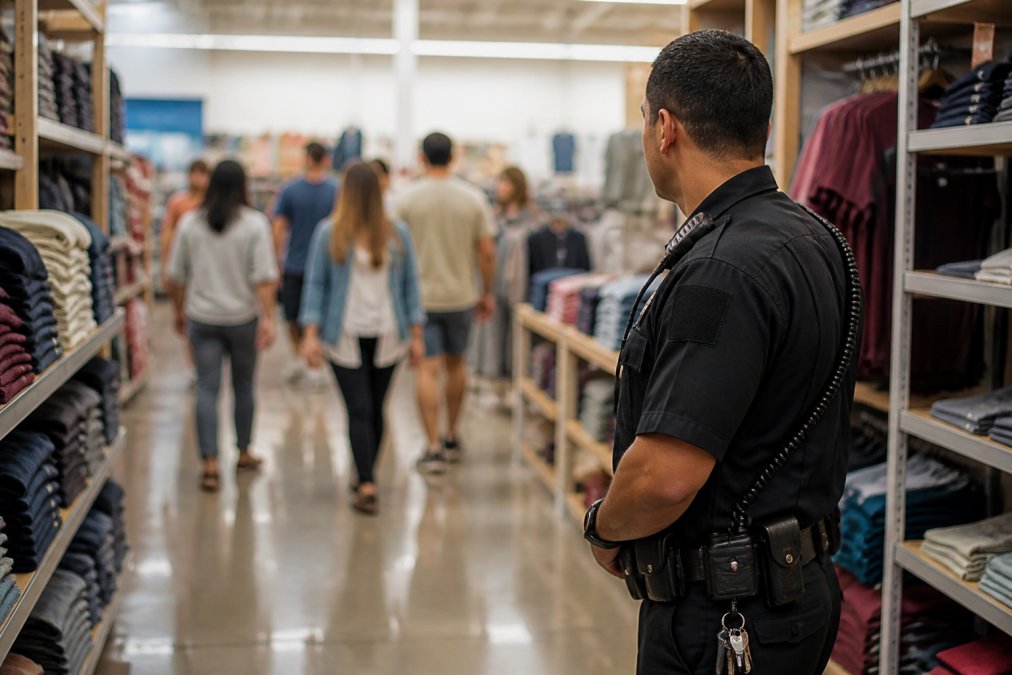
Ranger Operation Services: Best for Rapid Deployment and Tech-Forward Retail Security
Our top pick is Ranger Operation Services because they solve two biggest retail security headaches: slow staffing and unverifiable patrols. With a guaranteed 4-hour statewide deployment window and 24/7 dispatch, they fill vacancies faster than firms that might leave your storefront exposed for days. Their team includes over 500 licensed professionals, state-certified Class D & G officers with Level IV training.
What separates them is operational transparency. A proprietary mobile app provides real-time assignment tracking from dispatch to completion, letting you verify the officer is on-site without calling a supervisor. Every client also gets a named regional supervisor, solving the problem of not knowing who to call when a report is late. This hybrid of rapid response and modern tracking fits loss prevention managers who need data, not just presence.
Champion National Security: Best for Consistent On-Site Staffing
For a reliable, uniformed presence during predictable store hours, Champion National Security offers a solid, contract-based solution. They specialize in armed and unarmed guards for retail and commercial properties, backed by 24/7 dispatch and monitoring. Their strength is consistent staffing and real-time reporting, essential for a stable program without constant turnover.
Their customized security plans for retail storefronts are practical and focused on deterrence. However, they offer limited information on proprietary technology integrations, which means you may rely on traditional check-in methods rather than app-based verification. For retailers who prioritize a consistent human presence over advanced tech tracking, they remain a dependable choice.
Guardian Integrated Security: Best Hybrid Model for Cost-Conscious Retailers
Not every retail location needs a physical guard at every entrance. Guardian Integrated Security specializes in blending live remote video monitoring with physical patrol services, offering a cost-effective alternative to full-time on-site guards. Their model suits retailers with existing camera systems wanting proactive threat detection without multiple shifts of overhead.
This hybrid approach allows a single remote operator to monitor several store zones and alert on-site personnel or local authorities when a threat is detected. The tradeoff is clear: they do not provide a physical presence in all scenarios. If your risk assessment demands immediate physical intervention, you will still need a human guard, but for low-traffic periods, this model can significantly reduce security costs.
Fast Guard Service: Best for Temporary and Emergency Coverage
Retail disruptions do not follow a 9-to-5 schedule. For immediate coverage due to a sudden vacancy, special event, or security breach, Fast Guard Service focuses on rapid deployment for temporary needs. They offer armed and unarmed personnel alongside loss prevention and crowd control, with 24/7 customer support for urgent requests.
Their engagement models are flexible, which suits seasonal spikes or one-off events like a high-value product launch. The limitation is that their focus is on rapid deployment rather than long-term consulting or deep integration with your loss prevention strategy. For short-term gaps, they are a practical stopgap, but for a sustained security program, a provider with a dedicated supervisor is often a better long-term fit.
Armed vs Unarmed Security Guards for Retail: Which Do You Need?
The decision between armed and unarmed guards comes down to your risk assessment, liability tolerance, and merchandise. For most retail environments, unarmed guards are standard because they provide visible deterrence for shoplifting and loitering without escalating potential for violence. They manage access control, conduct patrols, and de-escalate situations, sufficient for most storefronts.
Armed guards are generally reserved for high-value assets like jewelry stores, medical marijuana dispensaries, or locations with a history of violent incidents. A firearm changes the liability profile significantly, so compliance and training requirements are more stringent (osha.gov). Many businesses find a hybrid model, unarmed guards for general patrol and armed response for cash handling or high-risk deliveries, balances safety with cost.
Retail Security Guard Responsibilities Checklist: What to Demand From Your Vendor
A professional retail security officer does far more than stand at the entrance. When vetting a provider, demand a clear scope of work including: visible deterrence of theft and shrinkage, professional access control at employee and delivery entrances, and regular patrols of the sales floor and stockrooms. Your vendor should also provide structured incident reporting documenting every event, from a suspicious person to merchandise recovery.
Your checklist should also cover crowd control during sales events and emergency response protocols for fire, medical issues, or active threats. Critically, the vendor must document how they verify patrols, via guard management system, QR code checkpoints, or mobile app, you need proof of service. Finally, confirm guards are trained in de-escalation and the firm carries adequate liability coverage to protect you if an incident leads to a lawsuit.
The Missing Metric: Loss Prevention ROI
Most vendor checklists stop at duties, but retail security is an investment that must be measured against shrink. The National Retail Federation's annual survey consistently shows inventory shrinkage costs retailers billions each year, with a significant portion from external theft and organized retail crime (nrf.com). A vendor that cannot articulate how their presence reduces that number is not a strategic partner; they are an expense.
When evaluating a provider, ask for their approach to these measurable outcomes:
- Shrink Reduction: What is their documented track record for reducing inventory loss at comparable retail locations?
- Recovery Rate: How many incidents result in merchandise recovery or apprehension? A high recovery rate signals proactive deterrence, not just passive observation.
- Deterrence Value: Can they quantify the value of prevented theft? While difficult to measure directly, a strong vendor will use incident reporting to track deterrence-related metrics, such as a decrease in repeat shoplifter visits.
- Cost per Incident: What is the total cost of a security response per incident, including guard hours, reporting time, and legal follow-up? This helps you compare the efficiency of different providers.
The Vetting Checklist: From Duties to Data
Your vendor agreement should not just list duties; it should define success in terms of data. The table below expands the traditional checklist to include the metrics that matter for your bottom line.
| Responsibility | Frequency | Vendor Proof Required | Loss Prevention Metric to Track |
|---|---|---|---|
| Storefront & floor patrols | Continuous / Hourly | GPS or app-based checkpoints | Deterrence incidents logged per shift |
| Incident reporting | As events occur | Written report within 24 hours | Recovery rate and value of merchandise |
| Access control | Daily | Visitor & vendor logs | Shrink variance at employee entrances |
| Emergency response drills | Quarterly | Training records & sign-offs | Response time to alarm activation |
| De-escalation & compliance training | Annual | Guard certification updates | Reduction in use-of-force incidents |
By shifting the conversation from a list of duties to a set of measurable outcomes, you position your security program as a profit-protection function, not just a loss-prevention expense. This is the difference between a guard company and a true security partner.
How to Improve Commercial Property Security With a Vendor Vetting Process
Improving your commercial property security starts long before a guard clocks in; it starts with how you vet the vendor. A structured vetting process protects you from liability of hiring underqualified personnel and ensures your program reduces shrinkage. The first step is to verify licensing and insurance, asking for the state license number and a certificate of insurance naming your property as additionally insured.
Next, evaluate training standards. Ask how guards are screened, whether they undergo background checks, and if certification is current. A common mistake is assuming a guard card means retail-specific training; threat detection and customer interaction skills vary widely. Test communication protocols by asking how incidents are escalated and how quickly you receive a written report. Finally, negotiate a service level agreement with response times for call-offs and a clear chain of command. For a modern approach, consider a provider like Ranger Operation Services offering a mobile app for real-time tracking, giving you data to verify your program works as designed.
The Legal Liability Blind Spot: Insurance You Must Verify
Most retail managers check for a license and basic certificate of insurance, but that is not enough to protect you from vicarious liability. If a security guard acts negligently or unlawfully on your property, your business can be held liable, even if the guard is employed by a third-party vendor (peer-reviewed research). To close this gap, verify the vendor carries specific coverage and your business is named as an additional insured on their policy.
Here is the insurance checklist to demand from any vendor before they deploy a single officer:
- General Liability Insurance: This covers third-party bodily injury and property damage. Confirm the policy limits are adequate for your store's foot traffic and risk profile.
- Workers' Compensation: This is non-negotiable. If a guard is injured on your property and the vendor does not carry workers' comp, the claim can fall back on your policy. Ask for a certificate of workers' comp insurance and verify it is current.
- Professional Liability (Errors & Omissions): This covers claims related to the guard's professional duties, such as failure to report an incident or negligent security. Many retail managers overlook this, but it is critical for protecting against lawsuits alleging inadequate security.
- Additional Insured Status: Your business must be named as an additional insured on the vendor's general liability policy. This means the vendor's insurance will respond to claims arising from their operations on your property, rather than your policy being the primary source of coverage.
The Vetting Process: A Step-by-Step Approach
A structured vetting process should be a documented, repeatable procedure, not an informal conversation. Here is a framework that moves beyond basic checks:
- Verify Licensing: Obtain the vendor's state license number and verify it with the state's regulatory body. Do not rely on a photocopy; check the state database directly.
- Review Insurance Certificates: Request a certificate of insurance that lists your business as an additional insured. Verify the policy dates and coverage limits are current.
- Audit Training Records: Ask for a sample of guard training files, including de-escalation certification, first aid/CPR, and any retail-specific modules. Confirm that training is ongoing, not just a one-time onboarding event.
- Test Communication Protocols: Simulate an incident and ask how it would be escalated to you. Time their response and evaluate the quality of the written report they provide.
- Negotiate the SLA: Ensure the service level agreement includes specific response times for call-offs (e.g., 4-hour replacement), a clear chain of command, and penalties for non-compliance.
- Conduct a Site Walkthrough: Have the vendor's supervisor walk your property and identify specific risks. A vendor that asks detailed questions about your layout, high-value merchandise, and past incidents is more likely to provide a tailored solution.
By adding these legal and insurance checks to your vetting process, you protect your business from liability and ensure that your security program is built on a solid foundation.
Frequently Asked Questions
What criteria should retailers use to evaluate security guard companies?
Retailers should evaluate security guard companies on licensing and insurance, guard training standards, experience with loss prevention, and the technology used for reporting and dispatch. Confirm the provider holds the proper state licenses and carries liability coverage. Ask about their incident reporting process and whether they offer 24/7 dispatch. A company with a clear vetting checklist and a named supervisor for your account often delivers more consistent service than one that rotates staff.
What is the difference between armed vs unarmed security guards for retail?
Unarmed guards focus on visible deterrence, customer service, access control, and observing and reporting incidents. Armed guards add a layer of force protection for high-risk environments like jewelry stores or locations with a history of violent incidents. Armed guards require additional state certification and higher liability coverage. Most retail locations choose unarmed guards because the presence of firearms can escalate situations and create liability concerns.
How do security guard companies improve loss prevention in retail?
Security guard companies improve loss prevention through trained observation, customer engagement, and incident documentation. Guards trained in shrinkage reduction can identify suspicious behavior and deter theft before it happens. They also provide detailed incident reports that help retailers spot patterns and adjust store layouts or staffing. Some companies integrate guards with CCTV monitoring and access control systems for a more complete security program.
Are retail security guards required to be licensed?
Yes. Every state requires security guards to be licensed. In Florida, for example, guards must hold a Class D or Class G license from the Department of Agriculture. Retailers should verify that a vendor's officers are properly certified and have completed state-approved training. Asking for proof of licensing and liability coverage is a standard part of vendor vetting. Working with an unlicensed provider creates legal and financial risk for your business.