
How to Book 24 Hour Security Services Fast
Learn how to book 24 hour security services with confidence. Explore vetting, hourly rates, and emergency deployment to secure your property now.
Table of Contents
- Why You Need a Plan to Book 24 Hour Security Services
- Armed vs. Unarmed Guards: What You Are Actually Booking
- Security Guard Hourly Rates: What Drives the Price
- The Security Guard Vetting Process: Verify Before You Sign
- Emergency Security Guard Deployment: The 4-Hour Standard
- How to Book 24 Hour Security Services in 5 Steps
- Tech-Enabled Guard Management: Live Tracking and Reporting
- Final Assessment: What to Demand From Your Provider
- Frequently Asked Questions
Last Updated: September 7, 2026
When a property becomes a target, waiting until Monday morning to secure it is a liability you cannot afford. Emergency situations, vacant construction sites, and high-risk events demand immediate physical presence, yet most traditional firms operate on slow, rigid scheduling. The ability to book 24 hour security services quickly separates proactive property managers from those reacting to losses. This guide outlines how to secure vetted, licensed guards on short notice, what drives the cost, and the standards to demand before signing a contract.
TL;DR:
- A rapid deployment guarantee is the single most important factor when you need coverage now
- Armed vs. unarmed guards serve different threat levels; booking the wrong one wastes money
- Vetting is non-negotiable: verify state licensing, insurance, and training before guards arrive
- Live tracking and digital reporting are now standard expectations, not premium add-ons
- A written post order is the difference between a guard and a professional security deployment
Why You Need a Plan to Book 24 Hour Security Services
Waiting for an incident before researching providers is the most expensive mistake a property manager can make. When loitering escalates to trespassing, or copper theft halts a construction schedule, the cost of downtime and damage far exceeds the price of a proactive contract. Having a pre-vetted provider ready to deploy means you can book 24 hour security services within hours rather than days.
The planning phase should include a basic risk assessment of your site. Identify entry points, high-value assets, lighting gaps, and patterns of suspicious activity. This information lets a security firm recommend the right mix of patrols, access control, and static posts. According to guidance from the Security Industry Association on risk assessment best practices, a documented site survey is the foundation of any effective security plan, allowing providers to tailor deployment rather than applying a generic package.
Armed vs. Unarmed Guards: What You Are Actually Booking
The distinction between armed and unarmed security personnel is not about aesthetics; it is about legal authority and liability. Unarmed guards provide visible deterrence, manage access control, and observe and report incidents. Armed guards carry firearms and are typically deployed where there is a heightened risk to life, high-value assets, or specific regulatory requirements.
Choosing between them depends on your threat assessment. A retail store dealing with shoplifting may only need unarmed loss prevention officers. A construction site storing expensive equipment in a remote area might justify armed officers for overnight posts. The decision also impacts your insurance profile and legal exposure. Confirm that any guard you book holds the correct state license for their role, such as Class D for unarmed and Class G for armed officers in Florida.
Security Guard Hourly Rates: What Drives the Price
Pricing for 24/7 security is not a single number; it is a composite of labor, overhead, and risk that varies by state and market.
Base Rate Components
A standard hourly rate bundles three elements: the officer's wage, payroll taxes and workers' compensation, and the provider's administrative overhead. Pricing for security services depends on factors such as local minimum wage laws, union presence, and the local cost of labor.
The Shift Premium Multiplier
Overnight, weekend, and holiday coverage is not priced the same as a 9-to-5 weekday post. Most providers apply a premium of 10% to 25% for off-hours shifts because staffing those slots requires a larger on-call pool and higher overtime exposure (payscale.com).
Site-Specific Risk Adjustments
Your property's risk profile directly changes the quote. A vacant lot with no lighting and a history of copper theft will be priced higher than a well-lit office lobby because the provider must assign a more experienced officer and possibly a patrol vehicle. Industries with regulatory oversight require guards with specialized training, adding $5 to $10 per hour to the base rate.
Hidden Fees and Contract Minimums
Ask every provider for a written breakdown of the following, and do not accept a single blended rate without line items:
- Administrative or mobilization fees: One-time charges to set up your account, conduct the site survey, and draft post orders. These typically range from $100 to $500.
- Equipment charges: Costs for radios, body cameras, patrol vehicles, or mobile surveillance units. These are sometimes bundled, sometimes billed separately.
- Overtime policy: If a guard calls out sick, what is the replacement cost? Some contracts bill overtime rates for emergency fill-ins.
- Shift minimums: Many firms require a minimum of 4 to 8 hours per shift, even if you only need coverage for a two-hour event window.
Why the Cheapest Quote Is Usually the Most Expensive
A low hourly rate often signals one of three things: the provider pays guards below-market wages, carries minimal insurance coverage, or excludes essential add-ons like reporting software or supervision.
Getting a Comparable Quote
To compare providers fairly, request a quote specifying the number of posts, hours per week, armed/unarmed status, shift schedule, and expected duties. Ask for the effective hourly rate after all fees are amortized across the contract term, that is the number that matters for your budget, not the advertised base rate.
The Security Guard Vetting Process: Verify Before You Sign
Your legal liability begins the moment a guard steps onto your property, so vetting is your first line of defense. Most clients stop at checking a license number, but a thorough process goes deeper into insurance structures and liability transfer mechanisms.
The Insurance Stack: What to Demand
A reputable firm will provide certificates of insurance (COIs) for three distinct policies. Do not accept a single COI as proof of full coverage:
-
General Liability Insurance: Covers third-party bodily injury and property damage caused by the guard's actions. Demand a minimum of $1 million per occurrence and $2 million aggregate. Verify the policy is active by calling the insurance carrier directly.
-
Workers' Compensation: Covers injuries the guard sustains while on your property. If a guard is injured and the provider lacks workers' comp, you may be liable for medical bills and lost wages. Confirm the policy is current and covers the state where your property is located.
-
Professional Liability (Errors & Omissions): Covers failures in the guard's duties, such as failing to report an incident or improperly handling a trespasser. This is less common but critical for high-liability sites.
Additional Insured Status: The Clause That Protects You
Ask to be named as an additional insured on the provider's general liability policy. This endorsement extends coverage to you for incidents arising from the guard's work, meaning the provider's insurer pays your defense costs if you are sued. Without this, you may have to rely on your own commercial policy.
Licensing Verification: Beyond the Number
Every state has its own licensing framework. In Florida, for example, unarmed guards hold a Class D license and armed guards hold a Class G license. The key is not just verifying the license exists but confirming it is active and in good standing. Most state regulators offer an online lookup tool, use it to check the license status of the specific officer assigned to your site, not just the company.
Training Documentation: What to Ask For
State-mandated training is a floor, not a ceiling. Ask the provider for a copy of their internal training curriculum and the number of hours each officer completes beyond state requirements. Specifically, ask about:
- De-escalation techniques: How does the guard handle a verbally aggressive individual without resorting to force?
- Report writing: Can the guard produce a detailed, chronological incident report that would hold up in court or for an insurance claim?
- Emergency response protocols: Does the guard know the evacuation routes, panic button locations, and chain of command for your specific site?
The Liability Checklist: 5 Questions to Ask Before Signing
Use this checklist during your vetting call to close the trust gap:
- "Can you provide a COI naming my property as an additional insured, effective the day the contract starts?"
- "What is your workers' compensation claims history over the last three years?"
- "Which state agency licenses your officers, and how do I verify the license of the specific guard assigned to my site?"
- "What is your internal training curriculum beyond the state minimum, and can I review a sample training log?"
- "If an incident occurs, who is my primary point of contact, and what is the documented escalation procedure?"
Emergency Security Guard Deployment: The 4-Hour Standard
When a critical incident occurs, the speed of your response determines the extent of your loss. When a critical incident occurs, the speed of your response determines the extent of your loss. Rapid response is a benchmark that separates responsive firms from slow ones. This means from the moment you place the call, a licensed officer is on-site and operational within four hours, around the clock.
This capability requires significant operational infrastructure: a 24/7 dispatch center, a large pool of licensed officers available for immediate assignment, and the logistics to move personnel across the state quickly. When you book 24 hour security services for an emergency, confirm the deployment guarantee in writing and ask about average actual response time, not just the maximum.
How to Book 24 Hour Security Services in 5 Steps
Securing immediate coverage does not have to be chaotic. A structured approach ensures you get the right guards, at the right price, with the right legal protections.
- Conduct a Rapid Site Assessment: Identify the immediate threat, the assets at risk, and whether the situation requires armed or unarmed response.
- Verify Provider Credentials: Confirm the firm holds the required state license, carries general liability insurance, and employs properly certified officers.
- Request a Detailed Quote: Ask for a written proposal that specifies hourly rates, shift minimums, and any additional fees for equipment or reporting.
- Define Post Orders: Provide written instructions covering access control, patrol routes, incident reporting, and emergency contact procedures.
- Confirm the Deployment Window: Get written confirmation of the response time and the name of the supervisor responsible for your account.
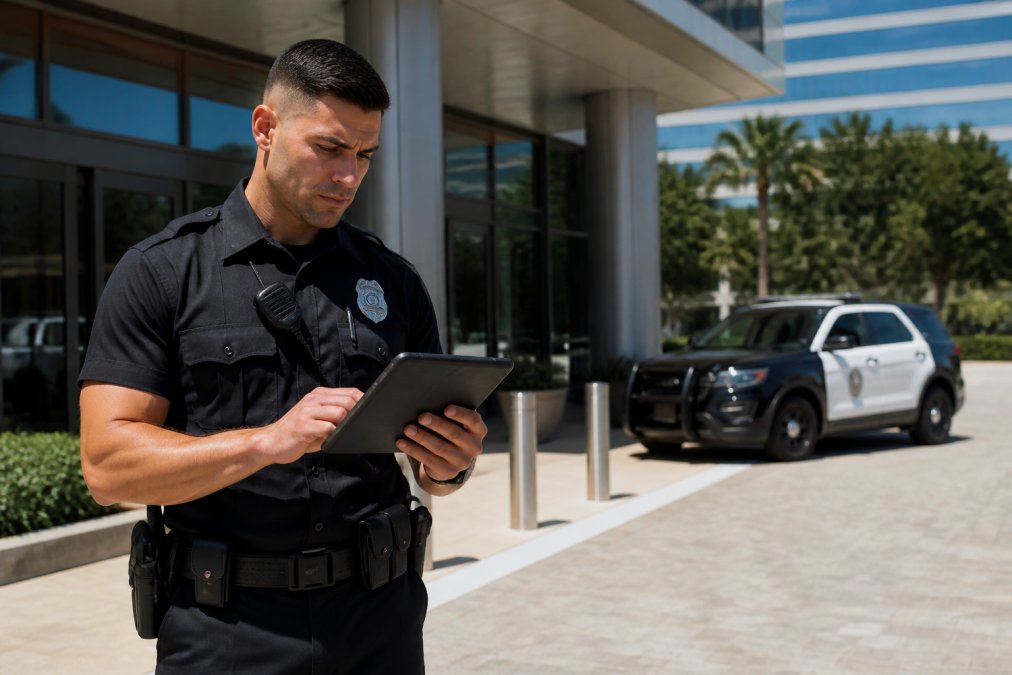
Following these steps reduces the risk of miscommunication and ensures the deployed officer understands your specific operational requirements from the first shift.
Tech-Enabled Guard Management: Live Tracking and Reporting
The era of the unaccountable security guard is over. Modern security management relies on technology to verify that guards are where they are supposed to be, doing what they are supposed to do. Live GPS tracking of patrol routes, digital check-in logs, and real-time incident reporting are now standard features.
This transparency protects both you and the security provider. For the client, it provides verifiable proof of service and immediate visibility into ongoing incidents. For the guard, it creates a digital record of their work, reducing disputes. When evaluating a provider, ask if they offer a client-facing portal or app for live status tracking. According to research on security technology trends in commercial properties, the integration of mobile technology and remote monitoring is increasingly critical for improving guard accountability and response times. A provider that relies on paper logs and phone calls is operating a decade behind current standards.
Final Assessment: What to Demand From Your Provider
Before you sign a contract for 24 hour security services, consolidate your expectations into a clear checklist. Demand a written deployment guarantee with a specific response time. Require documentation of state licensing and insurance for every officer assigned to your site. Insist on a named supervisor accountable for your account.
You should also expect a customized security plan, not a standard package. Your construction site, HOA gatehouse, or retail location has unique vulnerabilities that a generic post order will not address. Finally, evaluate the provider's technology. Live tracking, digital reporting, and simplified booking are not luxuries; they are essential tools for verifying you receive the protection you are paying for.
Securing your property against threats requires more than hiring a body to stand at a gate; it demands a vetted, licensed, and technologically equipped partner. The process of booking 24 hour security services is straightforward when you know the right questions to ask about deployment speed, guard certification, and reporting transparency. Ranger Operation Services delivers rapid, full-spectrum protection with a proprietary mobile app for real-time tracking and a named supervisor for every client. Get started with Ranger Operation Services and secure a partner who responds within four hours, not four days.
Frequently Asked Questions
How much does it cost to hire a security guard per day?
Security guard hourly rates vary based on whether you need armed or unarmed officers, the location, and the complexity of your site. Unarmed rates are lower than armed rates, but specialized posts like construction sites or medical facilities may carry different pricing. Most providers quote per hour rather than per day, so ask for a breakdown that includes overtime and holiday rates. Visit Ranger Operation Services' pricing page for current quotes tailored to your specific needs.
How do I verify the security guard vetting process?
Ask the provider directly about their security guard vetting process. A reputable firm will confirm that officers hold state licenses, such as Class D and G certifications, and have passed background checks. Inquire about ongoing training requirements and whether supervisors audit guard performance. Ranger Operation Services uses state-certified officers with Level IV training and assigns a named regional supervisor to every account, so you have a direct contact for quality control.
How quickly can emergency security guard deployment happen?
Emergency security guard deployment times vary by provider and location. Ranger Operation Services guarantees deployment within four hours across Florida, backed by 24/7 dispatch support. That means you can request coverage at 2 AM on a Sunday and still get an officer on site the same morning. Before signing a contract, ask the company to put their average response time in writing and confirm they have officers available in your specific area.
What is the difference between armed and unarmed 24-hour security services?
Armed guards carry firearms and typically hold additional licensing and training beyond standard security certification. They are suited for high-risk environments like medical marijuana facilities or sites with valuable assets. Unarmed guards provide visible deterrence, access control, and patrol services without weapons, making them a common choice for retail and office settings. Your risk assessment determines which level of protection your property requires.
How do mobile apps improve security guard management?
Proprietary mobile apps let you track assignments in real time from dispatch to completion. You can see when your officer arrives, monitor patrol progress, and receive digital reports without waiting for paper logs. This transparency helps property managers verify that contracted hours are actually fulfilled. Ranger Operation Services includes this technology at no extra cost, giving you live status updates and a clear audit trail for billing and compliance purposes.