
Armed vs Unarmed Security: When to Choose Each
Armed vs unarmed security: Compare armed and unarmed security services. Learn threat assessment, training requirements, liability, and when to deploy each.
Table of Contents
- Armed vs Unarmed Security: Core Differences
- Private Security Risk Assessment: Determining Your Needs
- Armed Security Guard Training Requirements and Certification
- When Armed Security Is the Right Choice
- When Unarmed Security Delivers Better Results
- Security Guard Liability Insurance and Legal Compliance
- De-escalation and Professional Conduct Standards
- Conclusion: Building Your Security Strategy
- Frequently Asked Questions
Last Updated: September 22, 2026
Armed vs Unarmed Security: Core Differences
The choice between armed and unarmed security services isn't just about visible weapons, it's fundamentally about risk tolerance, liability exposure, and the specific threats your property faces. Armed security offers high-deterrence presence and the capability to respond to serious threats. Unarmed security provides approachable professional monitoring, de-escalation focus, and significantly lower insurance premiums.
Understanding the distinction matters because the wrong choice creates unnecessary costs or leaves you exposed. A retail environment might thrive with unarmed guards trained in customer interaction. A high-value asset storage facility or cash transport operation demands armed response capability.
At Ranger Operation Services, we help clients match their security posture to their actual risk profile rather than defaulting to either extreme. The goal isn't maximum firepower, it's proportionate protection that keeps people safe while managing operational complexity and expense.
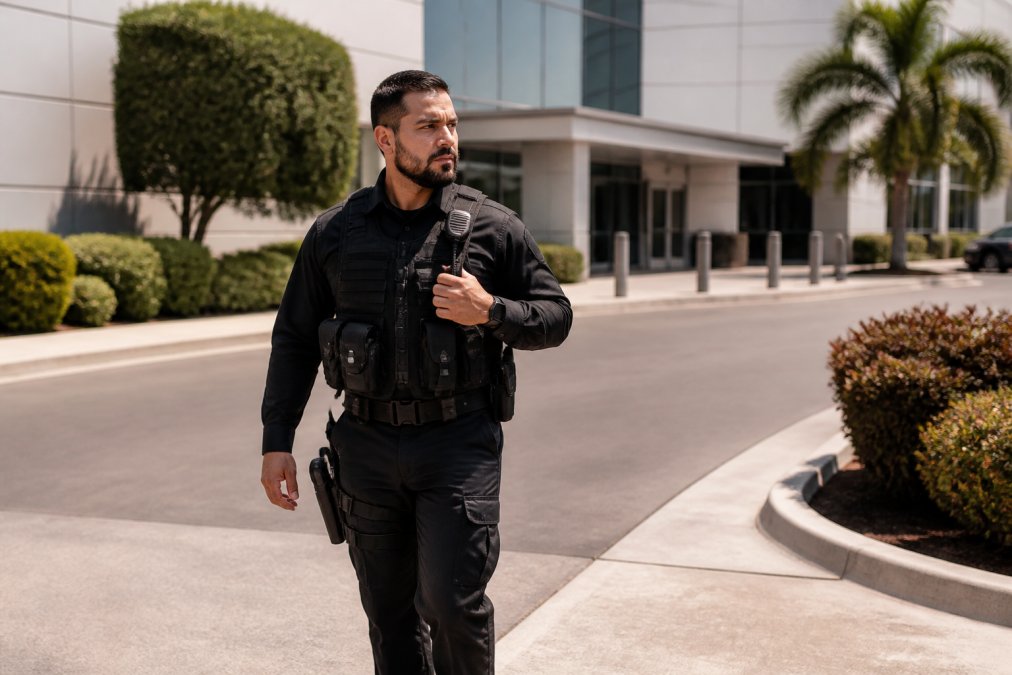
Armed security means guards trained, certified, and authorized to carry firearms. These officers complete extensive background checks, firearm certification, and tactical training. They're deployed where the threat level justifies armed response, high-value asset protection, executive security, or facilities with documented security incidents.
Unarmed security employs trained professionals without firearms who focus on deterrence through presence, access control, and de-escalation. These guards excel at customer-facing environments where approachability matters as much as security. They handle routine monitoring, patrol, and incident reporting without the liability complexity of armed personnel.
The core operational difference: armed guards can use force as a last resort if life-threatening situations emerge. Unarmed guards de-escalate and call law enforcement. Both approaches work, the question is which fits your specific environment and risk tolerance.
Private Security Risk Assessment: Determining Your Needs
Choosing between armed and unarmed security starts with honest threat assessment. Many property managers skip this step and either over-provision expensive armed guards or under-protect with minimal unarmed presence. A structured risk assessment prevents both mistakes.
Begin by documenting actual incidents from the past 12-24 months. Loitering? Trespassing? Theft? Vandalism? Violence? Specific incidents drive the conversation far more effectively than general anxiety. If your property has never experienced violence but loses inventory regularly to organized retail crime, that's a different security need than a facility with prior assault incidents.
According to ASIS International's security management guidelines, threat assessment should evaluate three dimensions: likelihood of the threat occurring, potential impact if it does, and your organization's risk tolerance. A construction site storing high-value equipment in a high-theft neighborhood faces different math than a suburban office park.
Consider your insurance carrier's requirements. Some policies mandate armed guards for certain asset classes or geographic areas. Others penalize armed security with higher premiums due to increased liability exposure. Your underwriter's position often determines feasibility regardless of your preference.
Document staffing requirements honestly. Do you need 24/7 coverage or peak-hours only? Single guard or multiple simultaneous posts? Ranger Operation Services guarantees deployment within four hours statewide, which matters if your risk profile demands rapid response rather than constant presence.
Armed Security Guard Training Requirements and Certification
Armed security officers operate under strict regulatory frameworks. Understanding these requirements helps you evaluate whether a provider actually deploys properly trained personnel or cuts corners.
Armed security requires Class D or Class G licensure. These certifications mandate background investigation, fingerprinting, and demonstrated firearms proficiency. Legitimate armed guards carry verifiable credentials, not just a business license.
Training includes firearms instruction covering safe handling, marksmanship, judgment, and rules of engagement. Officers must demonstrate competency with their assigned firearm and understand use-of-force policy, when they can draw, when they can fire, when they must hold position. Inadequate training creates liability nightmares.
De-escalation training matters as much as marksmanship. Armed guards who can talk down a confrontation avoid the legal and human cost of force. Professional armed security providers invest in communication skills and conflict resolution alongside tactical training. Ranger Operation Services deploys State-certified Class D & G officers with Level IV training, ensuring personnel understand both capability and restraint.
Ongoing recertification keeps skills current. Annual or semi-annual qualification shoots, legal updates, and policy reviews ensure guards don't become complacent. Ask any provider about their recertification schedule, it reveals how seriously they take competency maintenance.
Background investigation requirements are non-negotiable. Armed guards access sensitive areas and carry lethal force authority. Thorough vetting catches disqualifying issues: prior violence, substance abuse, financial desperation, or domestic violence history. Ranger Operation Services maintains $5M General Liability insurance and employs over 500 licensed officers, reflecting the scale of vetting required.
When Armed Security Is the Right Choice
Armed security makes sense when the threat level justifies the complexity, cost, and liability exposure. Specific scenarios typically require armed response:
High-value asset protection. Facilities storing jewelry, electronics, pharmaceuticals, or cash face organized theft targeting. Armed presence deters professional theft operations far more effectively than unarmed guards. The criminal calculus changes when security can physically resist rather than just observe and report.
Executive protection and transport. Moving valuable people or materials requires capability to respond to active threats. Unarmed guards can't protect an executive from armed kidnapping attempts. This is where armed security isn't optional, it's necessary.
Documented violence history. If your property has experienced prior assaults, armed robbery, or active threats, armed security provides response capability matching the demonstrated risk. Past behavior predicts future risk; armed guards acknowledge that reality.
High-crime geographic areas. Some neighborhoods experience routine armed robbery or gang activity. Unarmed guards become targets rather than deterrents in these environments. Armed presence shifts the risk calculation for potential criminals.
Medical marijuana and cannabis facilities. Compliance officers at treatment centers understand the regulatory requirements for armed transport and chain-of-custody documentation. State regulations often mandate armed security for certain operations. This isn't discretionary, it's legal requirement.
When Unarmed Security Delivers Better Results
Unarmed security often outperforms armed alternatives in customer-facing environments and lower-threat settings. The professional judgment isn't "armed vs. unarmed", it's "which security posture actually solves this problem?" Effective risk management relies on the integration of predictive threat detection to identify potential vulnerabilities before they escalate into situations requiring a physical intervention.
Retail and hospitality environments. Customers respond negatively to heavily armed security. Unarmed guards trained in customer service and de-escalation create safety without intimidation. They handle loitering, shoplifting prevention, and conflict resolution while maintaining the welcoming atmosphere retail needs.
Office and corporate facilities. Most office parks face routine trespassing, package theft, or access control issues, not armed robbery.
Security Guard Liability Insurance and Legal Compliance
This is where many property managers make expensive mistakes. Armed security carries liability exposure that unarmed security doesn't. Understanding insurance requirements and legal frameworks prevents catastrophic decisions.
De-escalation and Professional Conduct Standards
Professional security, armed or unarmed, depends on personnel who can assess situations accurately and respond proportionately. De-escalation skills separate professional security from reactive force.
Conclusion: Building Your Security Strategy
The armed vs. unarmed security decision should rest on three factors: your actual threat profile, your budget reality, and your operational environment. Over-provisioning wastes money. Under-provisioning creates risk. The right choice matches capability to need.
| Scenario | Best Security Type | Key Reason |
|---|---|---|
| High-value asset storage | Armed | Deters organized theft, enables physical response |
| Retail/hospitality environment | Unarmed | Customer-facing, de-escalation focused |
| Executive protection | Armed | Responds to active threats to personnel |
| Office building access control | Unarmed | Routine monitoring, visitor management |
| Construction site with materials | Unarmed | Patrol and deterrence for opportunistic theft |
| Medical marijuana facility | Armed | Regulatory requirement for transport/compliance |
| Documented violence history | Armed | Matches demonstrated threat level |
| Residential/HOA property | Unarmed | Professional presence without militarization |
Frequently Asked Questions
What are the key differences between armed and unarmed security guards?
Armed security guards carry firearms and complete extensive firearm licensing, tactical training, and use-of-force certification. Unarmed guards rely on situational awareness, de-escalation techniques, and access control. Armed guards provide visible deterrence and respond to high-risk threats; unarmed guards excel at customer-facing roles and general patrol duties. Both require background checks and professional conduct standards, but armed personnel face stricter licensing requirements and higher liability exposure.
How do I determine if my property requires armed security?
Conduct a private security risk assessment that evaluates threat level, asset value, incident history, and location. High-risk environments such as cash-handling businesses, medical marijuana facilities, construction sites with high-value materials, and executive protection scenarios typically warrant armed response. Lower-risk properties like retail stores, residential communities, and office buildings often benefit from unarmed patrols with armed backup available. Your security provider should assess your specific vulnerabilities before recommending force level.
What training requirements distinguish armed from unarmed security professionals?
Armed security guard training requirements include firearm certification, state licensing (Class D or Class G in Florida), tactical response training, and Level IV certification covering use-of-force policy and incident response. Unarmed guards require basic guard certification, background checks, and de-escalation training. Armed guards undergo significantly more rigorous vetting and ongoing education. Both must demonstrate professional conduct and situational awareness, but armed personnel face mandatory recertification and stricter legal compliance standards.
What are the liability and insurance implications of hiring armed security?
Armed security creates higher liability exposure. Your property and the security provider must carry adequate general liability insurance, typically $5 million or more for armed operations. Armed guards' use-of-force decisions can trigger lawsuits or regulatory investigation. Unarmed security has lower insurance premiums but different liability profiles around access control and incident response. Work with your insurance broker and security provider to understand coverage limits, exclusions, and your organization's exposure under each model.
How does public perception differ between armed and unarmed security?
Armed security provides visible deterrence and communicates serious threat response capability, critical for high-risk sites and asset protection. Unarmed guards project approachability and professionalism, making them ideal for customer-facing environments like retail, hospitality, and residential communities where residents or customers interact regularly with security staff. De-escalation and professional conduct matter in both roles, but unarmed personnel often create a less intimidating atmosphere while still maintaining effective access control and incident response protocols.