
Why 24/7 Dispatch Support Is Critical for Site Security
Why 24/7 dispatch support is critical for site security: 24/7 dispatch support enables rapid incident detection, faster response times, and continuous
Table of Contents
- Why 24/7 Dispatch Support Matters for Site Security
- Continuous Monitoring and Faster Incident Detection
- Security Guard Dispatch Software and Real-Time Response Coordination
- Real-Time Security Guard Tracking for Field Response
- Security Incident Response Procedures and Escalation
- Construction Site Security Monitoring and Theft Prevention
- Protecting People, Property, and Business Continuity
- Choosing a 24/7 Dispatch Provider That Delivers
- Frequently Asked Questions
Last Updated: October 18, 2026
Why 24/7 Dispatch Support Matters for Site Security
Why 24/7 dispatch support is critical for site security comes down to one fact: threats don't follow a nine-to-five schedule. A 2 AM break-in, Sunday-morning vandalism, or holiday-weekend theft won't wait for Monday. Rapid versus delayed response can mean the difference between a minor incident and a catastrophic loss.
Continuous monitoring and immediate dispatch support create a security posture that works. When a threat emerges, every minute matters: a round-the-clock team catches problems faster and prevents larger issues from developing.
Continuous Monitoring and Faster Incident Detection
The moment a threat occurs, the clock starts ticking. Continuous 24/7 monitoring means someone is watching your property right now, at midnight, at 3 AM, on holiday weekends.
Here's what happens when monitoring is absent during off-hours:
- A trespasser enters undetected and has hours to cause damage
- Equipment theft happens while the site sits empty
- A fire or safety hazard develops with no one to spot it
- Vandalism escalates because no one sees it happening
Faster incident detection changes everything. When monitoring flags an issue immediately, motion in a restricted area, a triggered alarm, attempted unauthorized access, dispatchers can assess the threat, verify what's happening, and deploy the right response before it worsens.
Real-time alerts mean stopping a threat in its first moments versus discovering damage hours later. That speed advantage makes continuous monitoring a core security necessity, not a convenience.
Security Guard Dispatch Software and Real-Time Response Coordination
Modern security guard dispatch software eliminates the old chaos of phone calls, radio static, and unclear assignments.
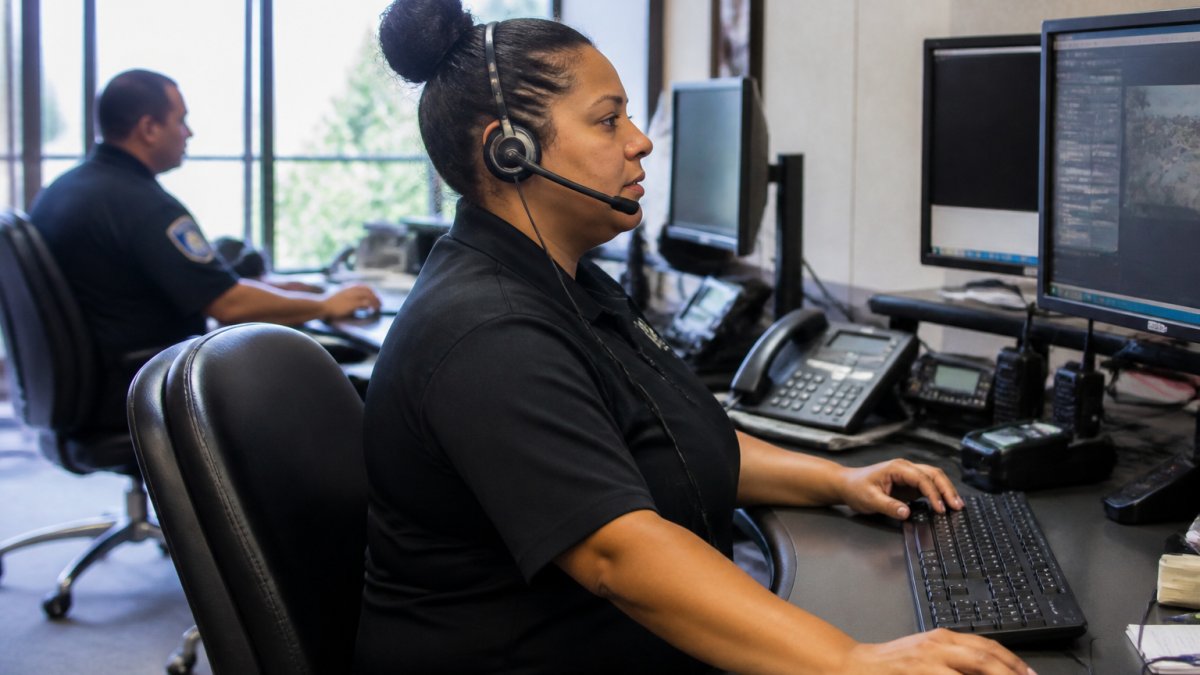
Real-time response coordination means:
- Dispatchers see live incident alerts and can verify details before sending anyone
- Field teams receive assignments instantly with exact location data
- Supervisors track each guard's position and status in real time
- Communication stays clear and documented throughout the incident
- Escalation happens automatically if a situation requires backup or additional resources
The software is the nervous system of your security operation. Without it, incidents are managed through fragmented phone calls; with it, every team member knows what's happening and what to do.
When a construction site reports suspicious activity at 3 AM, dispatch software can get that report to the nearest available guard within seconds, complete with location, threat details, and instructions.
Real-Time Security Guard Tracking for Field Response
Real-time guard tracking is only valuable when tied to numbers you can act on. Most providers show a map of dots; the useful version connects each dot to a response-time clock and an audit trail, the difference between a tracking dashboard and a response standard.
The four clocks that define a site-security response
Every incident should be measured against four timestamps, captured automatically by the dispatch platform rather than typed in after the fact:
- Alert acknowledgment time: from the moment a camera, sensor, alarm, or caller generates the alert to the moment a dispatcher claims it.
- Verification time: from acknowledgment to a disposition of confirmed incident, false alarm, or needs-more-information.
- Dispatch time: from verified incident to assignment accepted by a specific guard.
- Arrival and resolution time: from assignment to on-scene arrival, and from arrival to incident closure with a documented report.
How tracking data is actually used
Real-time tracking earns its cost in four operational routines:
- Closest-resource dispatch. The platform ranks available guards by drive time, not straight-line distance, and by current assignment status (available, en route, on scene, report writing). Dispatchers can see available candidates and their estimated arrival before assigning.
- Coverage-gap detection. Geofenced patrol checkpoints and dwell-time rules flag when a guard skips a checkpoint, lingers in a break area, or leaves an assigned zone. Supervisors review exceptions regularly.
- Response-time auditing. Every incident report should carry the four clocks above. When arrival times drift, the cause is usually dispatch assignment logic or patrol positioning, both fixable with data.
- Liability documentation. Timestamped location history, assignment records, and incident reports create a defensible record if a loss, injury, or claim is disputed later.
What tracking cannot do
Tracking does not replace verification: a dot moving toward an alert is not a confirmed incident. Pair tracking with video verification and access-control context so guards respond to real events, not every motion trigger. It also doesn't replace supervision, a named account supervisor reviewing exceptions and response-time trends turns location data into consistent performance.
For multi-site portfolios, tracking can roll up to a single view that compares response across properties. That comparison can help property managers decide where to add patrol coverage, adjust checkpoint schedules, or renegotiate service levels.
Security Incident Response Procedures and Escalation
A fast response only works if it's the right response, defined before the incident, not during it. The practical tool is an escalation matrix mapping severity to actions, contacts, and time limits. Without one, guards improvise; with one, response is repeatable across shifts and sites.
Build a severity tier model first
Most site-security programs use four tiers. The labels vary, but the logic is consistent:
- Tier 1, Life safety: active threat, fire or smoke, medical emergency, weapon observed. Immediate police/fire/EMS notification, guard safety first, site evacuation or lockdown per plan.
- Tier 2, Crime in progress: forced entry, theft in progress, trespasser in a restricted area, vandalism underway. Dispatch nearest guard, notify supervisor, prepare law-enforcement handoff.
- Tier 3, Suspicious activity: person or vehicle loitering, door propped, camera obstructed, after-hours motion with no confirmation. Verify by video or guard check before escalating.
- Tier 4, Service and documentation: equipment left unsecured, lighting outage, minor policy violation, false alarm. Log, route to site manager, close on next shift.
Tier assignment can be automatic where possible: alarm type, camera analytics, and access-control events can pre-populate the tier so the dispatcher confirms rather than decides from scratch.
The escalation matrix
For each tier, document who is contacted, in what order, within what time, and what happens if the contact does not answer.
| Tier | First action | Notify within | Escalate to if no answer |
|---|---|---|---|
| 1 | Call 911; direct guard to safety | Immediate | Supervisor, then site manager, then client emergency contact, every 5 minutes until reached |
| 2 | Dispatch nearest guard; pull video | 2 minutes | Supervisor at 5 minutes; law enforcement at 10 minutes or on confirmation |
| 3 | Verify by video or guard check | 10 minutes | Supervisor if unresolved at 15 minutes |
| 4 | Log and route | Next business day | Site manager if recurring |
Failed-contact procedures
The most common escalation failure is not the first call, it's the second. Define a call tree with at least three contacts per role, and require dispatchers to timestamp each attempt. If no contact is reached within the tier's limit, move to the next role and notify the account supervisor.
Responder coordination and handoff
Escalation doesn't end when a guard arrives. The matrix should specify the handoff: who meets law enforcement, controls scene access, preserves video and access logs, and notifies the client. For construction sites, add the general contractor's after-hours contact and the equipment-rental vendor's recovery line; for occupied properties, add the building engineer for fire and utility incidents.
Close the loop
Every Tier 1 and Tier 2 incident should get a documented review covering whether the matrix was followed, and what should change. Regularly review the matrix against actual incidents and update contacts, tiers, and time limits.
Construction Site Security Monitoring and Theft Prevention
Construction sites are theft magnets. High-value equipment, materials in open areas, temporary access points, and round-the-clock activity create constant opportunities for criminals. Theft prevention requires monitoring that never sleeps.
Construction site security monitoring means:
- Guards patrol designated areas on a schedule that prevents predictability
- Equipment storage areas get priority attention during high-risk hours
- Vehicle entry and exit points are monitored to catch theft in progress
- Perimeter security prevents unauthorized access to the site
- Incident documentation creates records for insurance and law enforcement
Equipment theft costs can be significant: a single stolen generator, compressor, or tool package can mean thousands of dollars, and repeated incidents can severely impact project budgets.
24/7 dispatch support for construction sites means immediate response to motion in restricted areas, triggered alarms, or unauthorized vehicles near equipment storage, stopping theft before it happens or catching it in progress.
Protecting People, Property, and Business Continuity
Security isn't just about preventing theft. It's about protecting the people on your property, the assets you've invested in, and your ability to keep operations running.
When a threat emerges at 2 AM:
- Employee safety depends on rapid response to any danger
- Property damage escalates quickly without immediate intervention
- Business continuity gets threatened by theft, vandalism, or safety incidents
- Liability exposure increases if response is slow or inadequate
24/7 dispatch support means you're never operating with a security gap: someone is always watching and ready to respond, and that consistency creates genuine protection.
For property managers, that means your tenants feel safer. For contractors, that means your equipment stays protected. For retailers, that means your loss prevention is continuous. For medical marijuana facilities, that means your compliance documentation is complete and your chain of custody is never broken.
Choosing a 24/7 Dispatch Provider That Delivers
Not all dispatch providers are equal. Some promise 24/7 coverage but deliver spotty response. Others charge premium rates for mediocre service. The right provider combines reliability, speed, training, and accountability.
Look for these capabilities:
- Verified response times: Ask for specific deployment targets. Four-hour response is a real guarantee, not a hope. Faster is better.
- Licensed, trained personnel: Your guards should be state-certified with ongoing training. Verify credentials before hiring.
- Real-time dispatch technology: Outdated radio systems or manual call logs don't cut it. You need software that tracks incidents and guards in real time.
- Dedicated supervisors: A named supervisor for your account means someone knows your property, your risks, and your needs.
- Incident documentation: Every response should be logged with details, timestamps, and follow-up actions. You need records for insurance, liability, and continuous improvement.
- Scalability: Your provider should handle growth. If you expand to new locations, they should scale with you.
Ranger Operation Services combines all of these. We maintain over 500 licensed officers across our operation, guarantee four-hour statewide deployment, and provide real-time tracking through our proprietary app. Every client gets a named regional supervisor who understands their specific security challenges.
The difference between a good provider and a great one shows up when you need them. Ask for references and proof they've prevented theft, caught trespassers, or stopped vandalism. Real results matter more than marketing promises.
The reality is simple: 24/7 dispatch support isn't a luxury, it's the foundation of security that works. Ranger Operation Services delivers exactly that: elite security with guaranteed four-hour response and real-time dispatch coordination. Book Security with a team ready 24/7 to protect what matters.
Frequently Asked Questions
Why is 24/7 dispatch support important for site security?
24/7 dispatch support ensures threats are detected and responded to immediately, regardless of time. Incidents occurring after business hours, theft, trespassing, equipment tampering, often go undetected without continuous monitoring and dispatch coverage. Round-the-clock dispatch enables rapid incident verification, field team coordination, and threat containment, reducing downtime and protecting property and personnel even during nights, weekends, and holidays.
How does real-time security guard tracking improve site security?
Real-time security guard tracking provides dispatchers and site managers with live visibility into guard locations, task status, and incident progress. When a threat occurs, dispatchers can immediately assign the nearest available officer, verify incident details through video or direct communication, and track response completion. This transparency reduces response time, prevents false alarms from going unverified, and ensures accountability across your entire security operation.
What should happen when a security incident is detected after hours?
When an alarm or incident is detected after hours, a 24/7 dispatcher should immediately verify the threat (via video, sensors, or direct communication), classify its severity, and assign the appropriate response. For critical threats, this means dispatching an armed or unarmed officer to the site, alerting management, and escalating to law enforcement if needed. For false alarms, the dispatcher documents the incident and prevents unnecessary field response, saving time and resources.
How quickly should a security dispatcher respond to an alarm?
Response time depends on threat severity and incident type. Critical threats (active break-in, violence, fire) require rapid dispatcher acknowledgment and field deployment. Construction site theft or trespassing may allow time for verification and dispatch. Leading providers commit to measurable service-level targets, such as four-hour deployment windows, and track response metrics to ensure accountability and continuous improvement in incident management.