
How to Become a Security Guard: A Step-by-Step Guide
Learn how to become a security guard, including licensing, training, background checks, and job search strategies. Start your security career today.
Table of Contents
- Security Guard Job Responsibilities and Career Overview
- Security Guard Training Requirements and Certification
- State Licensing and Legal Requirements
- Background Checks, Fingerprinting, and Drug Screening
- Armed versus Unarmed Guard Roles and Firearms Authorization
- How to Hire a Security Guard and Evaluate Service Contracts
- Security Guard Cost and Compensation
- Finding and Applying for Security Guard Jobs
- Frequently Asked Questions
Last Updated: October 5, 2026
Security Guard Job Responsibilities and Career Overview
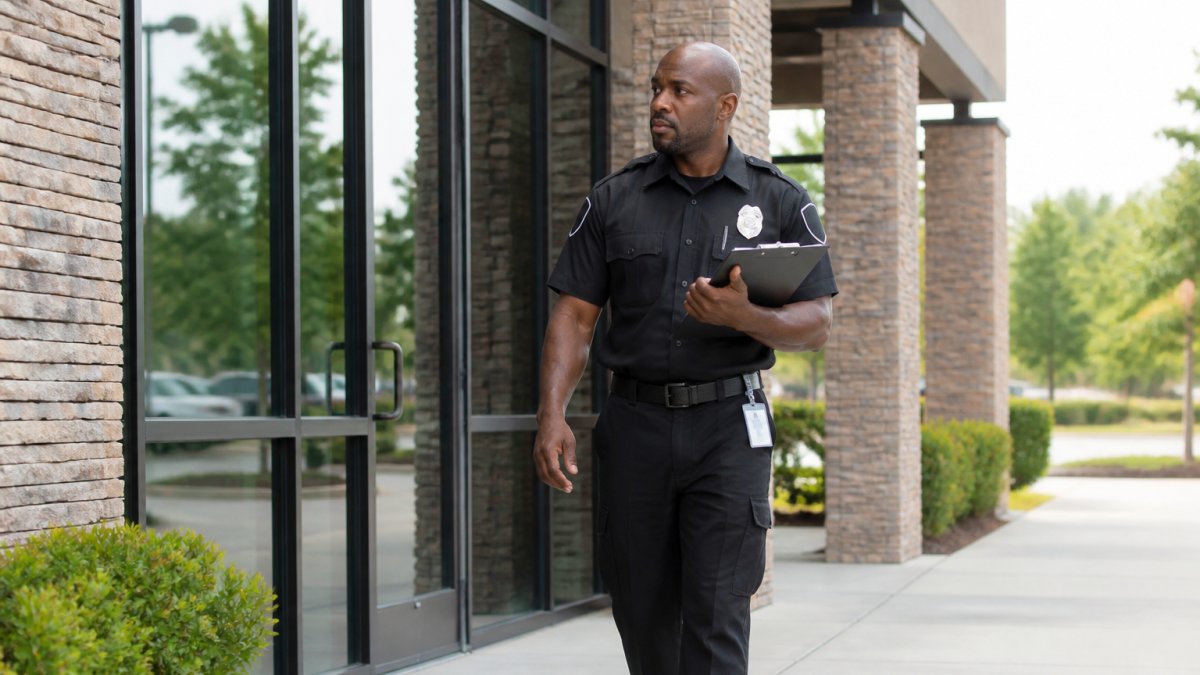
A security guard is a professional trained to protect people, property, and assets by monitoring facilities, controlling access, and responding to incidents. Security guards work across diverse environments: retail stores, office buildings, construction sites, hospitals, and special events.
The job responsibilities vary by employer and assignment type. Core duties include patrolling assigned areas, checking doors and windows for security breaches, monitoring surveillance systems, and documenting incidents in detailed reports.
What separates a strong security guard from an average one is professionalism and judgment. Many guards encounter situations that require restraint. A security guard might spot someone acting suspiciously but must determine whether to investigate, warn, or call police.
The career path for a security guard typically starts with entry-level unarmed positions. Experienced guards often advance to armed roles, supervisory positions, or specialized work like executive protection or loss prevention management.
Security Guard Training Requirements and Certification
Most states require security guards to complete formal training before working. The specific hours and curriculum vary by state and by whether the position is armed or unarmed. Many states mandate between 8 and 40 hours of initial training, covering topics like legal authority, communication skills, emergency response, and use-of-force limitations.
Training typically covers:
- Legal authority and limitations of a security guard
- How to recognize and report suspicious activity
- De-escalation and conflict resolution techniques
- Emergency response procedures and first aid basics
- Report writing and documentation standards
- Customer service and professional conduct
- Surveillance system operation
Beyond initial training, guards often pursue certifications that boost their qualifications and earning potential. Common certifications include CPR/First Aid, which many employers require or prefer. Some guards earn specialized credentials in loss prevention, access control systems, or event security.
Ranger Operation Services ensures every guard on its team meets rigorous training standards. The company's officers hold State-certified Class D & G licenses and complete Level IV training, exceeding many state minimums. This commitment to training directly translates to faster incident response and better protection for clients.
State Licensing and Legal Requirements
Every state regulates security guard licensing differently. Some states require a formal license before you can work; others impose lighter requirements. Understanding your state's specific rules is essential before applying for security guard positions.
Common state licensing tiers:
- Unarmed guard license - typically easier to obtain, required in most states
- Armed guard license - requires additional background checks, firearms training, and sometimes a separate permit
- Class D and Class G licenses - Florida's designation system (Class D for unarmed, Class G for armed); other states use different naming
To obtain a security guard license, you'll typically need to:
- Be at least 18 years old
- Have a high school diploma or GED
- Pass a background check
- Complete state-mandated training hours
- Pass a written exam
- Submit fingerprints and pay licensing fees
Each state sets its own fees, exam schedules, and renewal periods. Some states require annual renewal; others extend licenses for two or three years. Check your state's regulatory body (often the Department of Consumer Affairs or equivalent) for current requirements and application procedures.
Background Checks, Fingerprinting, and Drug Screening
Employers and licensing authorities conduct thorough background checks on all security guard applicants. This is non-negotiable, the role involves access to restricted areas and responsibility for protecting people and property.
What background checks typically cover:
- Criminal history (felonies and misdemeanors)
- Employment verification
- Driving record
- Credit history (in some cases)
- Civil court records
Fingerprinting is standard. You'll submit fingerprints to the state licensing board and often to the FBI for a federal check. This process identifies any criminal record and ensures you're not applying under a false identity.
Drug screening is increasingly common, particularly for armed guard positions or roles at sensitive facilities like hospitals and financial institutions. Employers typically conduct urinalysis tests to screen for controlled substances. A positive result disqualifies you from the position.
The screening timeline varies. Some employers complete background checks within one week; others take several weeks. Start the process early if you're applying for security guard jobs, as delays can affect your hire date.
Armed versus Unarmed Guard Roles and Firearms Authorization
The choice between armed and unarmed security guard work shapes your career trajectory, training requirements, and earning potential.
Unarmed guards monitor facilities, control access, and respond to incidents without weapons. They're commonly deployed at retail stores, office buildings, apartment complexes, and events.
Armed guards carry firearms and are authorized to use them in specific, legally defined situations. Armed guards work at banks, jewelry stores, high-value construction sites, and facilities transporting cash or sensitive materials.
To qualify for an armed guard role, you'll need:
- An unarmed security guard license (in most states)
- Firearms training certification
- Proof of safe firearm handling and accuracy
- Psychological evaluation (some states)
- Additional background investigation
Firearms authorization is heavily regulated. A security guard can only carry weapons approved by their employer and state law. They cannot use force beyond what the law permits, even if they're armed.
Many employers, including Ranger Operation Services, maintain teams of both armed and unarmed guards. The company deploys officers based on client needs, armed protection for high-risk sites, unarmed guards for general access control and patrols.
How to Hire a Security Guard and Evaluate Service Contracts
Hiring a security guard or contracting with a security company requires careful evaluation. You're entrusting someone with access to your property and responsibility for safety. The wrong hire creates liability; the right one provides peace of mind.
Key factors when hiring a security guard:
- Licensing verification - Confirm the guard holds a current, valid license for your state
- Training credentials - Check that training hours meet or exceed state requirements
- Background check results - Review the screening report yourself if permitted
- Communication skills - Interview candidates to assess professionalism and clarity
- Experience level - Entry-level guards cost less but offer less expertise; experienced guards command higher pay
- References - Contact previous employers to verify performance
When contracting with a security company, the evaluation process is more formal. You're assessing the company's ability to meet your specific needs.
What to look for in a security company:
- Licensed, bonded, and insured (verify coverage amounts)
- Transparent hiring and vetting practices
- Clear communication channels and 24/7 support
- Ability to customize security plans for your property
- Real-time tracking and incident reporting systems
- Responsive deployment (how quickly can they staff your site?)
What to Include in a Security Guard Services Contract
A solid contract protects both you and the security provider. It clarifies expectations and prevents disputes.
Essential contract elements:
- Scope of services - What specific duties will the guard perform? (patrol, access control, incident response, etc.)
- Staffing levels - How many guards, at what hours, and for how long?
- Licensing and insurance - Confirmation that guards are licensed and the company carries adequate liability coverage
- Response time - How quickly will the company deploy additional guards if needed?
- Incident reporting - What documentation will you receive, and how often?
- Termination clause - How much notice is required to end the contract?
- Cost and payment terms - Total price, billing schedule, and any additional fees
- Liability and indemnification - Who bears responsibility if something goes wrong?
Ranger Operation Services provides transparent, customizable contracts that spell out deployment timelines, staffing details, and real-time tracking through its proprietary mobile app. The company's four-hour deployment guarantee and named regional supervisor for each client ensure accountability and rapid response when incidents occur.
Security Guard Cost and Compensation
Security guard compensation varies widely based on experience, location, licensing level, and employer. Understanding typical pay ranges helps you budget for security services or evaluate job offers.
Typical hourly rates for security guards:
- Entry-level unarmed guards: $15-$20 per hour
- Experienced unarmed guards: $18-$25 per hour
- Armed guards: $20-$35 per hour
- Supervisory or specialized roles: $25-$40+ per hour
Several factors influence pay:
- Location - Urban areas and high-cost regions pay more than rural areas
- Industry - Retail and hospitality pay less; banks, pharmaceuticals, and construction sites pay more
- Shift timing - Night shifts and weekend work often include premiums
- Certifications - CPR, advanced training, and specialized credentials increase pay
- Employer size - Large security companies sometimes offer better benefits than small firms
When budgeting for security services, factor in more than just hourly rates. Companies charge for dispatch, supervision, equipment, insurance, and mobile app access. A contract with a professional security company like Ranger Operation Services typically costs more per hour than hiring an independent guard, but the added oversight, accountability, and rapid response justify the premium for most commercial clients.
Finding and Applying for Security Guard Jobs
Landing a security guard position starts with knowing where to look and understanding what employers expect. The job market is active, with openings at security companies, retail chains, construction firms, hospitals, and corporate offices.
Where to find security guard job openings:
- Security company websites - Major firms like Ranger Operation Services post openings on their careers pages
- Indeed, LinkedIn, and ZipRecruiter - General job boards with thousands of security listings
- Local staffing agencies - Specialize in placing guards quickly
- Direct employer applications - Retail chains, hospitals, and large corporations hire guards directly
- Trade associations - Industry groups sometimes maintain job boards
The application process typically follows these steps:
- Search for openings matching your location, experience level, and armed/unarmed preference
- Prepare your resume highlighting any security experience, training, certifications, and relevant skills
- Complete the application with accurate employment history and references
- Submit background check authorization - most employers require this before proceeding
- Interview with the hiring manager or security director
- Pass background screening and drug test - non-negotiable for most positions
- Receive job offer and start date
Tips for standing out as a candidate:
- Obtain your security guard license before applying (shows initiative and commitment)
- Earn CPR/First Aid certification (many employers require or prefer it)
- Highlight any relevant experience: military, law enforcement, loss prevention, or previous security roles
- Demonstrate communication skills and professional appearance during interviews
- Be honest about your background; employers will discover discrepancies anyway
- Ask thoughtful questions about the role, training, and company culture
Many applicants skip the licensing step and apply as unlicensed candidates, hoping the employer will sponsor training. This slows your hiring timeline.
Ranger Operation Services actively recruits qualified security professionals. The company's commitment to training and modern technology (its proprietary mobile app for real-time tracking) attracts experienced guards and career-minded professionals.
The path to becoming a security guard is straightforward: meet your state's licensing requirements, complete required training, pass background and drug screening, and apply to employers actively hiring.
When you're ready to hire security services for your property, prioritize licensed professionals from reputable companies. Ranger Operation Services brings together experienced, fully licensed officers, 24/7 dispatch support, and a four-hour deployment guarantee, ensuring your property gets the professional protection it deserves. Book Security today and experience the difference responsive, purpose-built security makes.
Frequently Asked Questions
What training and licensing should a security guard have?
A security guard must complete state-mandated training (typically 8-40 hours depending on the state), pass a background check, and obtain a security license. Most states require fingerprinting and drug screening before licensing. Armed guards need additional firearms training and authorization. Training covers access control, incident response, de-escalation, emergency procedures, and legal responsibilities. Verify your state's specific requirements, as they vary significantly.
How much does a security guard cost for a business?
Security guard cost depends on shift length, location, whether the role is armed or unarmed, and local market rates. Hourly rates typically range based on experience and specialization. Additional factors include contract length, 24/7 coverage needs, and specialized services like executive protection or event security. Request a quote from your security provider for accurate pricing tailored to your property's specific needs and risk profile.
What should a security guard services contract include?
A solid security services contract must define response time guarantees, guard qualifications and licensing status, scope of duties (patrol, access control, incident reporting), liability and insurance coverage, payment terms, and termination conditions. Include specific performance metrics, emergency contact protocols, and incident documentation requirements. Ensure the contract specifies whether guards are armed or unarmed and clarifies legal authority regarding use of force and de-escalation procedures.
What is the difference between armed and unarmed security guards?
Armed guards carry firearms and complete additional weapons training and authorization; they handle higher-risk environments like cash transport, executive protection, and sensitive facilities. Unarmed guards rely on observation, communication, and de-escalation for access control, patrol, and incident response at retail, hospitality, and residential properties. Armed roles require stricter background checks and ongoing firearms certification. Choose based on your property's threat level and legal requirements.