
Armed vs Unarmed Security for Private Events
Armed vs unarmed security: Compare armed and unarmed security for private events.
Table of Contents
- Armed vs Unarmed Security: Key Differences for Event Protection
- Florida Armed Security License Requirements and Training Standards
- Event Security Risk Assessment: Determining What Your Event Needs
- How Many Security Guards for an Event: Staffing and Deployment
- Event Security Guard Cost: What Affects Pricing and Budget Planning
- When Armed Security Is Appropriate for Private Events
- When Unarmed Security Is Sufficient for Private Events
- Comparison Table: Armed vs Unarmed Security
- Frequently Asked Questions
Last Updated: October 20, 2026
Armed vs Unarmed Security: Key Differences for Event Protection
Choosing between armed and unarmed security for your private event is a critical safety decision that depends on matching security type to your event's risk profile, venue, and legal requirements.
Armed vs unarmed security differs in capability, training, liability, and cost.
At Ranger Operation Services, we help event organizers make this decision through a practical risk assessment framework. Most events don't require armed security; some absolutely do.
What Armed Security Brings to an Event
Armed security officers carry licensed firearms and have advanced training in threat response, de-escalation, and use-of-force protocols.
Armed officers provide deterrence through visible capability. A trained, uniformed armed guard at an entrance changes behavior, and potential threats often avoid venues where armed security is present.
The trade-off is significant: armed officers require extensive licensing, ongoing training, and substantially higher insurance costs, plus liability unarmed security doesn't carry.
What Unarmed Security Brings to an Event
Unarmed security officers excel at customer service, access control, observation, and crowd management, responding through de-escalation and communication rather than force.
Unarmed officers cost significantly less, deploy faster due to less stringent licensing, and create a friendlier atmosphere, an unarmed professional blends into the event environment where an armed officer would stand out.
The limitation is real: unarmed officers cannot legally carry firearms and have no authority to use force beyond citizen self-defense.
Florida Armed Security License Requirements and Training Standards
Florida has two primary security guard licenses: Class D for armed officers and Class G for unarmed officers.
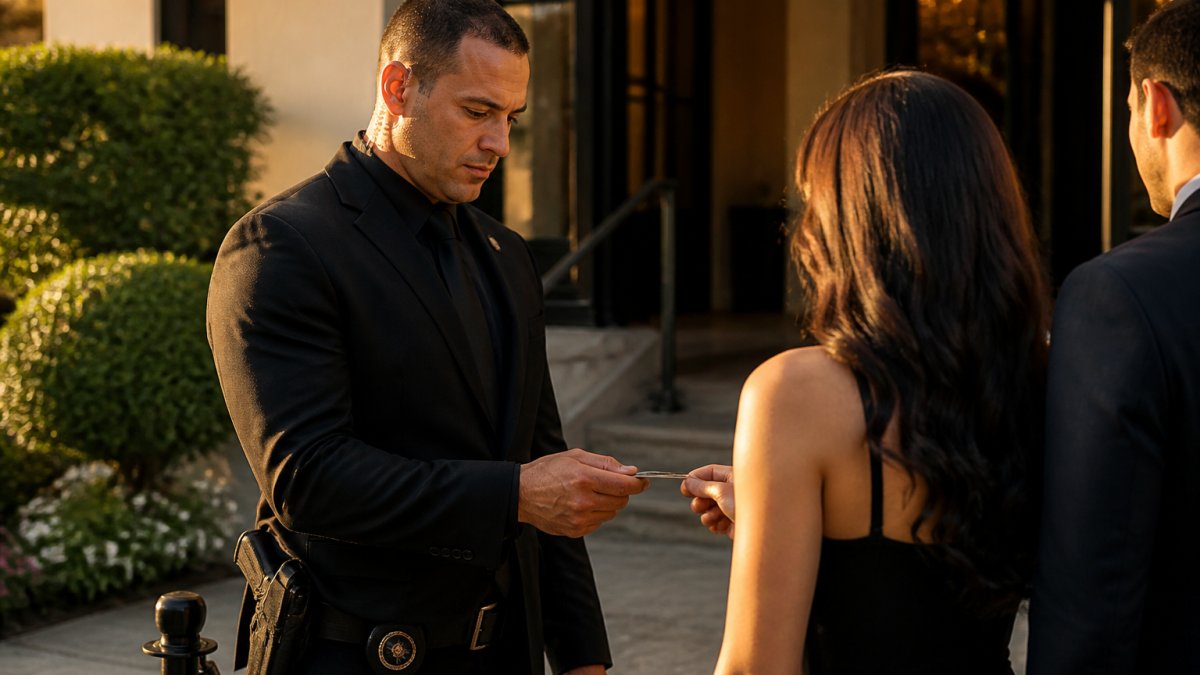
Class D License for Armed Officers
A Class D license authorizes a security officer to carry a concealed firearm while working.
A properly licensed Class D officer understands when deadly force is legally justified and can articulate decisions in incident reports and legal proceedings.
Class G License for Unarmed Officers
A Class G license is Florida's basic security guard license.
The lower barrier to entry for Class G doesn't mean lower quality, a well-trained, experienced unarmed officer often provides better customer service and threat awareness than an armed officer for events where weapons aren't necessary.
Training and Certification Requirements
Professional firms often add training in active threat response, crowd management, VIP protection, and specialized event security.
When evaluating a provider, ask about training beyond state minimums: scenario-based training, de-escalation instruction, and how often firearms proficiency is refreshed for armed officers.
Ranger Operation Services maintains Level IV training standards for all Class D and Class G officers, exceeding Florida's minimum requirements through continuous professional development, scenario training, and documented competency assessments.
Event Security Risk Assessment: Determining What Your Event Needs
The right security choice depends on your event's risk profile, a straightforward evaluation of attendance, assets, and threat likelihood.
Low-Risk Events: Weddings, Corporate Receptions, Private Parties
Low-risk events have predictable guest lists, minimal high-value assets, and no VIP or public figures present. Typical examples include:
- Wedding receptions with 50-200 invited guests
- Corporate holiday parties or office celebrations
- Private birthday parties or anniversary events
For these events, unarmed security is appropriate: professional presence, guest management, and minor incident response like entry screening, monitoring for suspicious behavior, and managing disruptions professionally.
Cost matters at this level.
Medium-Risk Events: High-Value Merchandise, Alcohol Service, Large Attendance
Medium-risk events introduce factors that increase security needs: large crowds, alcohol service, high-value assets, or semi-public attendance. Examples include:
- Weddings with 300+ guests and open bar
- Corporate events with valuable equipment or merchandise displays
- Charity galas with significant cash donations or silent auctions
At this level, unarmed security remains appropriate in most cases, the increased risk comes from scale and complexity, not threats requiring armed response, and unarmed officers excel at crowd management, access control, and observation.
Deploy more unarmed officers, perhaps one per 75-100 guests, rather than fewer armed officers. Multiple unarmed personnel provide better coverage, faster response, and a more customer-service-oriented atmosphere.
High-Risk Events: VIP Attendance, High-Value Assets, Potential Serious Harm
High-risk events involve genuine threat potential: VIP or public figures, extremely high-value assets, or situations where serious harm could occur. Examples include:
- Events with political figures, celebrities, or high-profile business leaders
- Art exhibitions or auctions with multi-million-dollar inventory
- Jewelry shows or luxury goods displays
At this level, armed security becomes appropriate. Armed officers provide deterrence and response capability unarmed officers cannot; if your risk profile suggests potential for serious harm, armed protection is a legitimate business decision.
High-risk events also require additional layers, access control, credential verification, bag screening, and law enforcement coordination, with armed officers working alongside these measures, not as a replacement.
How Many Security Guards for an Event: Staffing and Deployment
Officer count depends on attendance, venue layout, and risk profile. Under-staffing creates coverage gaps; over-staffing wastes money and feels intrusive.
Calculating Guard-to-Guest Ratios
A practical starting point:
- Low-risk events (100-200 guests): 1 officer per 100-150 guests. A 150-person wedding needs one to two officers.
- Medium-risk events (200-500 guests): 1 officer per 75-100 guests. A 300-person corporate event needs three to four officers.
- High-risk events (500+ guests or VIP attendance): 1 officer per 50-75 guests, plus specialized roles like access control and surveillance.
These ratios assume standard venues with clear entry/exit points; large, multi-level, or outdoor spaces may need additional coverage, and events with alcohol typically need more officers because alcohol increases minor incidents.
Also factor in shift length. A four-hour event with two officers is different from a ten-hour event with the same staffing. Officers need breaks.
Positioning and Coverage Strategy
Effective deployment means strategic placement, not just adding bodies. Key positions:
- Primary entrance: One officer managing guest arrival and credential verification
- Coat check and bag areas: One officer if high-value items are present
- Alcohol service area: One officer at events with open bars to monitor consumption and prevent over-service
- Exits and secondary entrances: Coverage to prevent unauthorized access and monitor departures
For a 200-person wedding, two officers, one at the entrance and one circulating, provides adequate coverage. For a 400-person corporate event with alcohol, four officers deployed across entrance, bar area, interior patrol, and exits makes sense.
Event Security Guard Cost: What Affects Pricing and Budget Planning
Security pricing varies widely. Understanding the cost drivers helps you budget accurately and compare provider quotes.
Armed vs Unarmed Cost Drivers
Armed officers cost more than unarmed officers for specific reasons:
- Licensing and training: Class D armed certification requires 40 additional hours of training beyond Class G requirements. This training is more expensive and specialized.
- Insurance liability: Armed officers carry significantly higher liability exposure. Security firms maintain higher insurance coverage for armed personnel, and those costs reflect in pricing.
- Firearms proficiency: Ongoing firearms training and proficiency testing add to operational costs.
- Background requirements: Armed officers typically undergo more rigorous background checks and vetting.
The cost difference varies by market and provider. The exact difference depends on local demand, training standards, and the specific firm.
Other Factors Affecting Total Event Security Cost
Beyond armed versus unarmed, these factors affect total security expense:
- Event duration: Longer events require more officer hours and potential shift changes.
- Number of officers: More coverage means higher total cost. A two-officer event costs roughly twice as much as a one-officer event.
- Venue location: Rural areas may have higher costs due to travel time. Urban areas may have higher base rates due to demand.
- Time of day: Late-night or early-morning events sometimes carry premium rates.
When budgeting, add 15-20% contingency. If your assessment suggests two officers but the event grows to 250 guests, you may need a third; building in flexibility prevents mid-event scrambling.
When Armed Security Is Appropriate for Private Events
Armed security makes sense when your event's risk profile genuinely justifies it, matching capability to actual threat.
Consider armed security when:
- VIP or public figures attend. Political figures, celebrities, or high-profile business leaders create threat profiles that unarmed security cannot adequately address. Armed officers provide deterrence and response capability.
- Extremely high-value assets are present. Multi-million-dollar inventory, jewelry, art, or cash requires armed protection. The asset value justifies the cost.
- Credible security threats exist. If you've received threats or intelligence suggesting potential serious harm, armed officers are appropriate.
- Your venue is in a high-crime area. Location matters. An event in a low-crime suburb has different risk than an event in a high-crime neighborhood.
Armed security is a legitimate business decision when the threat level genuinely warrants it. Don't choose it because it sounds more professional or a provider recommends it; choose it because your event's actual risk profile requires it.
When Unarmed Security Is Sufficient for Private Events
Most private events are appropriately served by well-trained unarmed security. Unarmed officers provide:
- Professional presence and customer service
- Effective access control and credential verification
- Observation and threat awareness
- De-escalation and incident management
Unarmed security is sufficient when:
- Your guest list is known and vetted
- No VIP or high-profile attendees are present
- No extremely high-value assets require protection
- Your venue is in a safe area
The vast majority of weddings, corporate events, private parties, and fundraisers fall into this category. Unarmed security isn't a compromise; it's the appropriate tool for the job.
Comparison Table: Armed vs Unarmed Security
| Factor | Armed Security | Unarmed Security | Winner for Most Events |
|---|---|---|---|
| Licensing | Class D (requires 12+ months Class G + 40 hours armed training) | Class G (40 hours basic training) | Unarmed (faster deployment) |
| Hourly Cost | $45-65/hour | $25-35/hour | Unarmed (50% lower cost) |
| Liability Exposure | High (firearms, use-of-force) | Lower (no weapons authority) | Unarmed (less insurance burden) |
| Deterrence | Maximum (visible firearm capability) | Effective (professional presence) | Armed (if threat is real) |
| Customer Service | Professional but formal | Excellent (blends into event) | Unarmed (better guest experience) |
| De-escalation Capability | Strong (trained officers) | Strong (trained officers) | Tie |
| Appropriate For | VIP events, high-value assets, credible threats | Weddings, corporate events, private parties | Unarmed (95% of events) |
| Deployment Speed | Slower (more licensing requirements) | Faster (fewer requirements) | Unarmed |
The decision between armed and unarmed security isn't complicated once you understand your event's actual risk profile. Most private events are appropriately served by professional unarmed security. Events with genuine threats, VIP attendance, or extremely high-value assets warrant armed protection.
When you're ready to book security for your event, work with a provider who conducts a real risk assessment rather than pushing one option.
Frequently Asked Questions
When should a private event hire armed security?
Armed security becomes appropriate when an event carries elevated risk of serious harm, involves high-value assets or VIP attendance, or occurs in a venue where potential threats exist. Events with alcohol service, large crowds exceeding 500 guests, or those featuring valuable merchandise or executive protection typically benefit from armed officers. A risk assessment considering venue location, guest profile, and potential threat scenarios should guide this decision. Consult with a licensed security provider to evaluate your specific event's risk profile.
What are the Florida armed security license requirements?
Armed security officers in Florida must hold a Class D license. Class D licensees are authorized to carry firearms and provide armed security services. Verify that any armed officer you hire displays current Class D certification.
How many security guards does a private event need?
Staffing depends on event size, guest count, venue layout, and risk level. High-risk events or venues with multiple entry points may require higher ratios. Factors like alcohol service, VIP attendance, and outdoor versus indoor settings affect calculations. A professional security provider can conduct a site assessment and recommend appropriate staffing levels for your specific event.
What is the typical cost difference between armed and unarmed security for events?
Armed security generally costs more than unarmed due to higher licensing requirements, specialized firearms training, increased liability insurance, and enhanced background vetting. Cost differences vary by provider, event duration, location, and local demand. Additional factors include shift length, number of officers needed, and whether specialized equipment is required. For accurate pricing tailored to your event, contact a licensed security provider directly for a quote based on your specific needs and risk profile.
What can unarmed security guards do at an event?
Unarmed security guards provide access control, guest screening, crowd management, observation for suspicious behavior, and incident response. They can enforce venue rules, manage queues, check credentials, and coordinate with local law enforcement if needed. Unarmed officers receive training in de-escalation, customer service, and emergency procedures. They cannot carry firearms but are fully licensed professionals capable of protecting guests and property through visible deterrence, professional presence, and rapid response to incidents.