
24/7 Emergency Fire Watch in Jacksonville
24/7 emergency fire watch services in Jacksonville with rapid deployment, licensed guards, and full compliance.
Table of Contents
- What Is 24/7 Emergency Fire Watch and Why It Matters
- Fire Watch Guard Requirements in Florida
- Emergency Fire Watch Deployment Time and Response Protocols
- Fire Watch vs. Fire Alarm Monitoring: Key Differences
- Fire Watch Log Sheet Template and Documentation Standards
- Step-by-Step Emergency Protocol for Fire Watch Operations
- How to Choose a Fire Watch Service for Your Property
- Frequently Asked Questions
Last Updated: October 2, 2026
What Is 24/7 Emergency Fire Watch and Why It Matters
Emergency fire watch is the continuous, on-site monitoring of a property by a trained, licensed guard when fire detection or suppression systems are compromised, under maintenance, or absent. A fire watch guard maintains constant visual surveillance, documents conditions in real-time, and responds immediately to fire hazards or threats.
This service exists because fire codes require active monitoring when automated systems fail. A property without functioning fire alarms or sprinklers is a liability, and a legal violation. That's where 24/7 emergency fire watch becomes essential. The guard becomes your property's eyes and ears, preventing small problems from becoming catastrophic ones.
Why does this matter right now? Properties face downtime during system repairs, renovations, or upgrades. During those windows, occupancy continues, risk increases, and compliance becomes non-negotiable. A single fire incident at an unmonitored property can result in loss of life, property damage, regulatory fines, and civil liability. Insurance policies often require documented fire watch coverage to remain valid during system outages.
Ranger Operation Services maintains a team of over 500 licensed professionals ready to deploy within four hours, 24/7. This rapid-response capability ensures your property stays protected and compliant, even during emergencies.
Fire Watch Guard Requirements in Florida
Florida's fire safety regulations demand that properties maintain continuous monitoring when fire suppression or detection systems are offline. Fire watch guards must meet specific qualifications to fulfill this role legally and effectively.
A licensed fire watch guard in Florida must hold a valid Class D security license or Class G (armed) license issued by the Florida Department of Agriculture and Consumer Services. Beyond licensure, guards require fire safety training that covers fire prevention, hazard recognition, evacuation procedures, and incident documentation. Many jurisdictions also mandate that fire watch personnel understand local fire codes and can communicate directly with dispatch and fire marshals.
The guard's primary responsibility is to patrol the property at regular intervals, document observations in a fire watch log sheet, and remain alert to fire hazards or suspicious activity. They must know the location of all exits, fire extinguishers, and emergency equipment.
Documentation is critical. Fire codes require detailed logs showing patrol times, observations, and any incidents or hazards detected. These records protect both the property owner and the guard, creating a clear audit trail of compliance. Inspectors and insurance adjusters review these logs to verify that monitoring occurred as required.
Emergency Fire Watch Deployment Time and Response Protocols
When a fire detection system fails or a suppression system goes offline, immediate action is required. The clock starts the moment the system becomes non-operational, and fire codes typically mandate that a guard be on-site within a specific timeframe, often 24 hours, though some jurisdictions require faster response.
Ranger Operation Services guarantees deployment within four hours statewide. This rapid-response window is critical because every hour without monitoring increases risk. A four-hour deployment window means your property transitions from unmonitored to actively protected before most business-day shifts end, minimizing the vulnerability window.
Response protocols depend on the type of emergency. For a system failure during business hours, a guard arrives to begin continuous monitoring while technicians repair the system. For overnight failures, the guard establishes a patrol schedule covering all occupied and unoccupied areas.
Once on-site, the guard initiates a documented patrol schedule. This typically means walking the property every 15 to 30 minutes, depending on size and risk level. The guard checks for active fires, hazardous conditions, blocked exits, and unauthorized access.
If a fire is detected, the guard immediately calls emergency dispatch and initiates evacuation procedures according to the building's emergency plan. The guard also alerts building occupants, ensures clear egress routes, and provides information to arriving fire personnel. This real-time response can mean the difference between containment and catastrophe.
Fire Watch vs. Fire Alarm Monitoring: Key Differences
Many property managers confuse fire watch with fire alarm monitoring. They serve different purposes and operate under different conditions, understanding the distinction is essential for compliance and risk management.
Fire alarm monitoring relies on automated systems. Smoke detectors, heat sensors, and sprinkler systems trigger alarms that are transmitted to a central monitoring station. A dispatcher receives the alert and contacts emergency services.
Fire watch, by contrast, is active human surveillance. A licensed guard is physically present on the property, conducting regular patrols and visual inspections. Fire watch doesn't depend on sensors or electronic systems. It works during system downtime, renovations, and emergency scenarios.
The key difference: fire alarms detect and alert; fire watch prevents and responds. Fire watch is required by code when fire alarm systems are offline. It's also the only option for properties without automated systems, such as certain construction sites or temporary structures.
Many properties use both. During normal operations, fire alarms provide automated monitoring. During system maintenance or emergencies, fire watch provides continuous human oversight. This layered approach ensures protection in all scenarios.
Fire Watch Log Sheet Template and Documentation Standards
Documentation is the backbone of fire watch compliance. A properly maintained fire watch log sheet proves that monitoring occurred, creates a record for insurance purposes, and provides evidence of due diligence if an incident occurs.
A standard fire watch log sheet includes the following fields:
- Date and Time: The specific date and time of each patrol or observation
- Guard Name and Badge Number: Identification of the monitoring personnel
- Property Address and Location: The specific area patrolled or monitored
- Weather Conditions: Temperature, precipitation, wind, relevant to fire risk
- System Status: Which fire detection or suppression systems are offline and why
- Observations: Any hazards, unsafe conditions, or unusual activity detected
- Actions Taken: Corrective measures, notifications to management, or emergency responses
- Signature: Guard's signature confirming the accuracy of the log entry
Entries should be made at regular intervals, typically every 15 to 30 minutes, depending on the property's risk profile. Entries must be specific and factual. Vague entries like "all clear" provide no real documentation value. Instead, write "Perimeter checked, no hazards observed, all exits clear, fire extinguishers accessible."
Documentation standards vary by jurisdiction, but most fire marshals expect logs to be legible, chronological, and retained for at least one year. Some jurisdictions require daily summary reports and weekly sign-offs by a supervisor or property manager.
Digital fire watch logs are increasingly common and offer advantages: automatic timestamping, searchability, and secure storage. Many security firms now use mobile apps that allow guards to log observations in real-time from the property, eliminating handwriting issues and ensuring data integrity.
Step-by-Step Emergency Protocol for Fire Watch Operations
When a fire detection or suppression system fails, a clear protocol ensures rapid deployment and effective monitoring. Here's how professional fire watch operations unfold from the moment the system goes down.
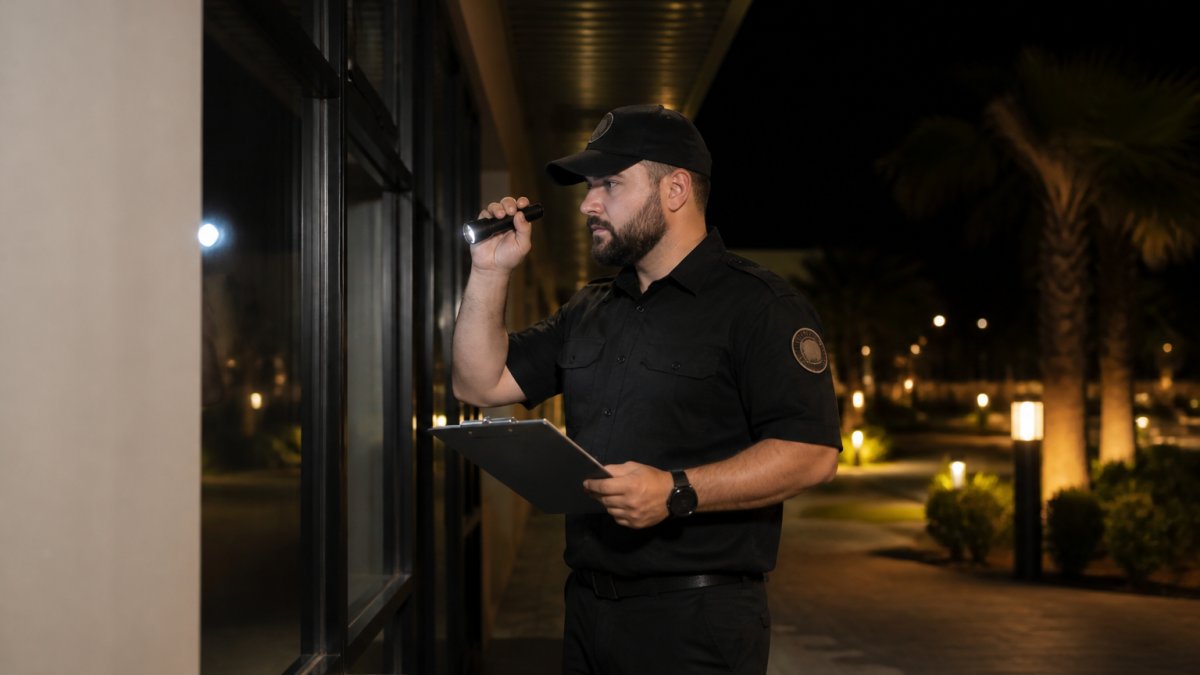
Step 1: System Failure Detection and Notification The property manager or building operator discovers the system failure, either through an alarm system alert, visual inspection, or maintenance notification.
Step 2: Guard Deployment and Briefing The dispatch team receives the request and assigns an available, licensed guard.
Step 3: On-Site Arrival and Initial Assessment The guard arrives on-site and conducts an initial walkthrough. This assessment identifies all exits, fire extinguishers, emergency equipment locations, and potential fire hazards.
Step 4: Establish Patrol Schedule and Documentation Protocol The guard establishes a regular patrol schedule, typically every 15 to 30 minutes.
Step 5: Continuous Monitoring and Hazard Response Throughout the monitoring period, the guard remains alert to fire hazards, unauthorized access, and suspicious activity.
Step 6: Emergency Response If a fire is detected, the guard immediately calls 911 and provides the dispatcher with the property address, fire location, and occupancy information.
How to Choose a Fire Watch Service for Your Property
Selecting a fire watch provider is a critical decision that affects your property's safety, compliance, and liability exposure.
Start by verifying licensure. Every guard must hold a valid Class D or Class G security license from the Florida Department of Agriculture and Consumer Services.
Response time is non-negotiable. Ask what deployment guarantee the provider offers. A four-hour statewide deployment window is critical; anything longer increases your vulnerability.
Ask about documentation and reporting practices. Does the provider use digital fire watch logs or paper-based systems? How are logs stored and retained?
Inquire about the provider's experience with your property type. A firm experienced with construction sites may lack expertise in healthcare facilities or retail properties.
Check references and credentials. Ask for client references from similar properties and verify that the provider maintains adequate insurance, typically at least $5 million in general liability coverage.
Finally, clarify pricing and service terms. Fire watch costs depend on deployment time, property size, risk level, and monitoring duration.
When your property's fire detection or suppression system fails, you need immediate, professional protection.
Frequently Asked Questions
What are the requirements for a fire watch in Florida?
Florida fire watch requirements mandate that trained, licensed personnel monitor properties when fire protection systems are impaired or during high-risk conditions. Guards must conduct regular patrols, maintain detailed fire watch log sheets documenting all observations, and immediately report hazards to the fire marshal and property management. NFPA 101 standards require fire watch personnel to understand evacuation procedures, know the location of fire extinguishers and alarms, and maintain constant vigilance during operating hours or 24/7 if the property remains occupied.
How quickly can fire watch guards be deployed in an emergency?
Fire watch services can offer rapid deployment for critical situations. 24/7 emergency fire watch deployment ensures that guards are available immediately when fire alarm systems fail, construction work creates fire hazards, or properties require temporary protection. Rapid emergency response is essential for compliance with fire codes and minimizes property risk during system downtime or repairs.
What should a fire watch log sheet template include?
A comprehensive fire watch log sheet template must document the date, time, guard name, patrol route, weather conditions, and any hazards or incidents observed. Include sections for system status checks, alarm testing results, visitor activity, and emergency contact information. Each entry should record the exact time of patrols, areas inspected, and actions taken. This documentation proves compliance with fire marshal requirements and provides a clear incident history if emergencies occur.
What is the difference between fire watch and fire alarm monitoring?
Fire watch involves on-site personnel conducting active patrols and manual inspections, while fire alarm monitoring uses electronic systems and central station dispatch. Fire watch is mandatory when fire alarm systems are disabled for maintenance or when high-risk conditions exist. Central station monitoring complements but does not replace fire watch during system failures. Many properties require both: active fire watch during impaired system periods and continuous alarm monitoring once systems are restored.