
How Can You Prevent Theft in High-Risk Retail Stores?
Retail loss prevention strategies for high-risk stores reduce shrink fast. Learn proven security tactics and staff protocols that work.
Last Updated: October 26, 2026
Quick Summary
Retail loss prevention is the practice of reducing theft, fraud, and operational errors that cut into store profits. High-risk stores can see shrinkage rates of 3-5% of sales from external theft, internal theft, and operational mistakes. A solid loss prevention plan combines visible deterrence, access control, inventory discipline, and incident response.
- Shrinkage comes from three sources: external theft, internal theft, and operational mistakes.
- High-risk stores can experience shrinkage rates reaching 3-5% of sales.
- A phased approach starting with operational basics delivers fastest impact in the first 30 days.
- Visible deterrence, access control, inventory discipline, and incident response form the four layers of an effective plan.
- Staff should never physically detain suspected shoplifters; instead alert management and document the incident.
Table of Contents
- Understanding Retail Loss Prevention and Shrinkage
- Assessing Your Store's Theft Risk Profile
- Building a Retail Loss Prevention Plan
- Implementing Shoplifting Prevention in Retail Stores
- Deploying Retail Loss Prevention Best Practices
- Using Retail Security Guard Services and Technology
- Starting Your Loss Prevention Program Today
- Frequently Asked Questions
Understanding Retail Loss Prevention and Shrinkage
Retail loss prevention is the practice of reducing theft, fraud, and operational errors that cut into store profits. Shrinkage, the difference between inventory counted and inventory sold, hits high-risk stores hard. Learn specific tactics for reducing inventory shrinkage that address each source of loss. It comes from three sources: external theft (shoplifting, organized retail crime), internal theft (employee dishonesty), and operational mistakes (scanning errors, damaged goods).
High-risk stores face unique pressures. Urban locations, high-value merchandise categories, and stores in areas with organized retail crime networks see shrinkage rates that can reach 3-5% of sales. That's real money walking out the door. You don't need to choose between security and customer experience.
At Ranger Operation Services, we work with retail chains fighting organized retail crime and shrink. The National Retail Federation's 2026 security survey documents the scale of the problem and confirms that stores with active loss prevention programs see measurable improvement.
Let's walk through how to build a loss prevention system that actually works for your store.
Assessing Your Store's Theft Risk Profile
Before you spend a dollar on security, know what you're protecting against. Not all high-risk stores face the same threats. A luxury goods retailer needs different controls than a grocery chain. A downtown location has different vulnerabilities than a suburban mall store.
Score these dimensions for every store in your portfolio:
- Merchandise value density. High-value, small-footprint items (electronics, cosmetics, designer goods, power tools, infant formula) attract organized theft rings. Score by average retail value per cubic foot of display space.
- Location and access. Urban stores, transit hubs, and sites near known retail crime corridors face higher external theft risk. Note proximity to highways, pawn shops, and resale markets.
- Operating hours and staffing. Overnight and single-coverage shifts carry different risk than daytime multi-staff floors. Score each shift separately.
- Historical incident pattern. Pull 12 months of incident reports and POS exception data. Look for clustering by time of day, product category, entry point, and employee schedule.
- Physical layout weaknesses. Fitting rooms, restrooms, blind spots near exits, and long aisles without sightlines are classic theft zones. Pharmacy sections and cosmetics aisles attract organized gangs.
- Current control strength. Rate existing cameras, EAS, locked cases, and staffing against each asset. A high-exposure asset with weak controls jumps to the top of the list.
Loss Prevention Magazine's risk assessment framework outlines how to score your vulnerabilities systematically.
High-risk areas inside your store matter too.
Building a Retail Loss Prevention Plan
A solid plan has four layers: visible deterrence, access control, inventory discipline, and incident response.
Visible Deterrence
Access Control
Inventory Discipline
Incident Response
The Federal Trade Commission guidance on retail loss prevention practices covers what you can and cannot do when addressing suspected theft.
Implementing Shoplifting Prevention in Retail Stores
How do retail loss prevention officers reduce shrink details how trained loss prevention officers use deterrence, covert monitoring, and incident documentation to prevent shoplifting in practice.
Deploying Retail Loss Prevention Best Practices
Retail Loss Prevention Strategies 2026: The Complete Guide expands on these best practices with a comprehensive framework for retail loss prevention strategies tailored to different risk profiles.
Using Retail Security Guard Services and Technology
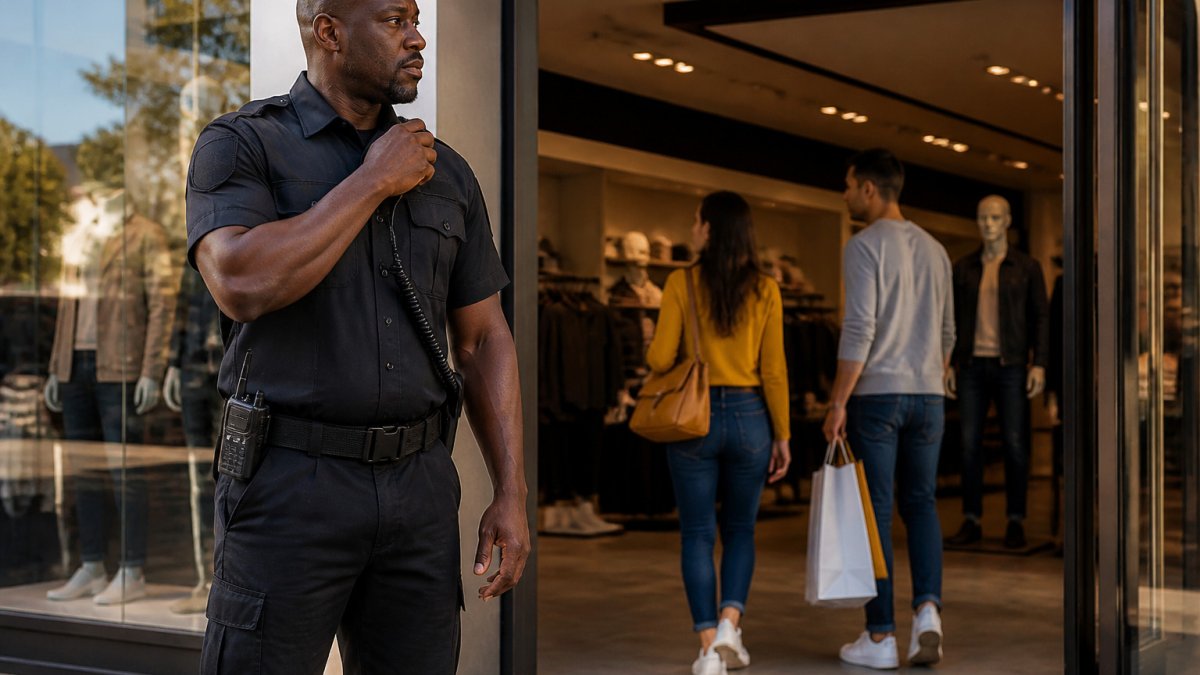
Ranger Operation Services deploys armed and unarmed guards across retail environments. With 500+ licensed officers and a 4-hour deployment guarantee, we can scale security to match your specific needs.
Starting Your Loss Prevention Program Today
You don't need to implement everything at once.
Days 1-30: Operational basics (lowest cost, fastest impact)
- Fix sightlines: remove tall shelving blocking views, reposition high-value displays near registers, and clear exit approaches.
- Tighten checkout: require every item to scan, make bag checks routine and non-accusatory, and rotate staff across shifts so procedures stay consistent at 2 PM and 10 PM.
- Start weekly cycle counts on your top three high-risk categories. Accurate inventory data is your early warning system.
- Train staff on non-confrontation: alert management, document, and never physically detain a suspected shoplifter. De-escalation protects employees and limits liability.
Days 31-60: Visible deterrence and access control
- Add signage and camera coverage at entrances, fitting rooms, and high-value aisles. Test EAS pedestals at every exit weekly.
- Lock cases for the highest-value inventory and restrict stockroom and cash-office access to named employees.
- Write the incident response procedure down: who responds, what gets documented, when law enforcement is called, and how footage is retained.
Days 61-90: Technology and professional support where the data points
- Add AI-assisted video analytics or smart sensors only in areas where cycle counts and incident reports show persistent loss.
- Bring in uniformed guard coverage for peak-risk hours if the first 60 days show unresolved external theft. Ranger Operation Services deploys armed and unarmed guards across retail environments with rapid response, visible deterrence, and professional incident documentation. With 500+ licensed officers and a 4-hour deployment guarantee, we can scale security to match your specific needs.
Measure what works
A phased approach to loss prevention lets you build momentum and measure results without overwhelming your team.
| Phase | Timeline | Key Actions | Focus |
|---|---|---|---|
| Operational basics | Days 1-30 | Fix sightlines, tighten checkout, start cycle counts | Lowest cost, fastest impact |
| Visible deterrence | Days 31-60 | Add signage, camera coverage, lock cases, document procedures | Access control and deterrence |
| Technology and support | Days 61-90 | Deploy AI analytics, add uniformed guards at peak hours | Data-driven, professional response |
Frequently Asked Questions
What is the difference between internal theft and shoplifting in retail loss prevention?
Internal theft (employee fraud and operational errors) and external theft (shoplifting) together drive retail shrinkage. Shoplifting accounts for a significant portion of external losses, while employee theft and inventory mistakes represent internal shrinkage. A complete retail loss prevention strategy addresses both. Most high-risk stores find that 30-40% of shrinkage comes from internal sources, making staff training and access controls as critical as anti-shoplifting measures.
How do you conduct a risk assessment for retail loss prevention?
Start by analyzing your shrinkage data: compare physical inventory to point-of-sale records to identify your actual shrinkage rate. Map high-risk merchandise categories and store zones where losses concentrate. Review incident reports and security footage. Assess staffing levels during peak and off-peak hours, evaluate your current security technology, and identify blind spots in camera coverage. Document customer traffic patterns and entry/exit points. This data-driven assessment reveals which theft vectors pose the greatest risk to your store, guiding where to invest in retail loss prevention controls first.
What should employees do if they suspect shoplifting?
Train staff to observe and document suspicious behavior without confrontation. Employees should note the person's appearance, items of concern, time, and location, then immediately report to management or security. Never attempt to stop or accuse a suspected shoplifter, as this creates legal and safety risks. Managers should review footage, assess the situation, and decide whether to approach the customer or contact law enforcement. Clear, documented incident procedures protect both your staff and your store from liability while gathering evidence for loss prevention decisions.
How can retail security guard services reduce shrinkage in high-risk stores?
Professional retail security guard services provide visible deterrence, active monitoring, and rapid incident response. Guards positioned at entrances and throughout the store discourage theft through their presence alone. They conduct real-time surveillance, identify suspicious patterns, and intervene appropriately during incidents. Guards also enforce access control, manage customer flow, and document incidents with proper evidence collection. Their training in retail loss prevention procedures ensures compliance with legal and safety boundaries. Combined with technology, retail security guard services create a comprehensive loss prevention strategy that measurably reduces both external and internal shrinkage.
