
How to Evaluate Executive Protection Training Quality
Executive protection training quality: Learn how to assess executive protection training programs with a practical evaluation framework.
Table of Contents
- Why Training Quality Matters in Executive Protection
- Assess Instructor Qualifications and Real-World Experience
- Evaluate the Executive Protection Training Checklist
- Review Executive Protection Training Scenarios and Hands-On Practice
- Verify Accreditation, Licensing, and Credential Standards
- Understand Executive Protection Course Duration and Intensity
- Measure Training Outcomes and Graduate Performance
- Red Flags: What to Avoid in Executive Protection Training
- Frequently Asked Questions
Last Updated: October 9, 2026
Why Training Quality Matters in Executive Protection
Executive protection training quality determines whether your team can actually protect someone when it matters.
The difference between adequate and excellent training often shows up only when you need it, too late to discover gaps.
Quality training covers threat assessment, defensive tactics, emergency response, and protective driving as integrated skills that work together under pressure.
Assess Instructor Qualifications and Real-World Experience
Instructors make or break a training program.
Look for instructors with verifiable backgrounds in:
- Law enforcement or military service
- Active protective operations experience
- Documented training certifications
- Ongoing professional development
Ask specific questions: How many protective assignments have they worked? What threats have they personally encountered? How recently did they work in the field?
Verify credentials independently. Check whether certifications are current and from recognized bodies, legitimate ones come from established training providers or law enforcement/military organizations with standards.
Evaluate the Executive Protection Training Checklist
A solid executive protection training program covers specific core areas. Check whether the curriculum includes all of these components before enrolling anyone.
Core Curriculum Components
The foundation includes threat assessment and risk analysis.
Defensive tactics training teaches agents to physically respond when threats escalate: controlling an aggressor, creating distance, and protecting the principal.
Firearms handling and safety are essential for armed roles.
Protective driving teaches agents to operate vehicles defensively, recognize surveillance, and respond to threats on the road, including evasive driving techniques and vehicle vulnerabilities.
Practical Skills Assessment
Quality training includes scenario-based exercises where trainees practice skills under realistic conditions. Classroom lectures alone don't prepare anyone for actual protective work.
Effective scenarios include:
- Active threat situations requiring tactical response
- Medical emergencies requiring first aid or CPR
- Surveillance detection during advance work
- Vehicle security and evasive driving
- Communication and coordination under pressure
Watch for programs that claim to teach protective skills through lectures and videos alone. Real competence requires hands-on practice with feedback from experienced instructors.
Assessment should measure whether trainees can perform skills, not just understand them: Can they draw and fire accurately? Recognize medical emergencies?
Review Executive Protection Training Scenarios and Hands-On Practice
Scenario-based training separates quality programs from mediocre ones. Real-world protective work rarely follows a script. Agents need experience responding to unexpected situations under pressure.
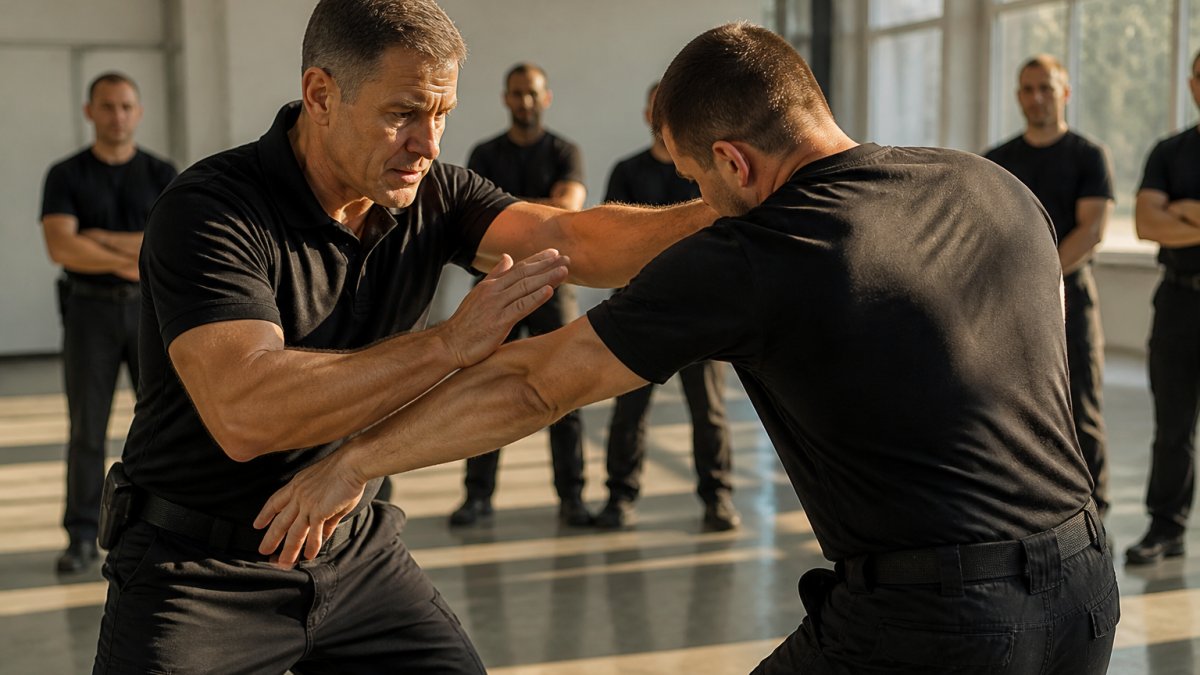
Quality programs use multiple scenarios testing different skills.
The best programs run scenarios multiple times with different variables, building muscle memory and decision-making ability.
Watch for programs that run scenarios but don't provide meaningful feedback.
Observe whether trainees perform under realistic stress.
Verify Accreditation, Licensing, and Credential Standards
Accreditation and licensing are the most misunderstood quality signals in executive protection training. A certificate on the wall proves almost nothing by itself. What matters is what the credential represents, who issued it, and whether it is still valid. Rigorous evaluation requires looking beyond the paper to the actual performance outcomes measured by the Kirkpatrick training model, which provides a framework for assessing whether the instruction truly translates into operational competence.
Separate the Three Layers of Credentialing
Protective training credentials fall into three layers, and conflating them is the most common evaluation mistake:
- State licensing of the training provider or the agent. Many states regulate security guards, private investigators, or armed agents through a licensing board or state police. Requirements vary widely, some mandate minimum training hours before an armed guard license is issued, others require almost none. The license confirms a legal floor, not a quality ceiling.
- Provider or program accreditation. Voluntary accreditation from an industry body signals that a program submitted to outside review of its curriculum, instructor standards, and assessment methods. It is not a government endorsement and is not required to operate.
- Individual instructor certifications. These are the most granular and most frequently expired. A firearms instructor certification, CPR/AED credential, or defensive tactics instructor certificate each has its own renewal cycle.
A program can be strong on one layer and weak on the others. Evaluate all three separately.
How to Verify Each Layer
State licensing: Identify the agency regulating security training in the state where the course is delivered and where your agents will work, these are often different.
Accreditation: Ask which accrediting body reviewed the program, when the last review occurred, and what it covered.
Instructor credentials: Request the credential name, issuing organization, issue date, and expiration date for every instructor who will teach your team, then verify at least two independently.
A credential that expired last year is not a credential. Renewal requirements exist because skills and standards change. An instructor teaching use-of-force law from a lapsed certification may be teaching outdated legal standards.
What Accreditation Does and Does Not Prove
Accreditation confirms a program met an outside body's standards at the time of review. It does not confirm that the curriculum reflects current threat conditions, instructors are currently practicing, graduates achieve competence, or assessment methods are rigorous. Treat accreditation as one input among several, not a substitute for the hands-on and outcomes checks covered elsewhere in this guide.
Jurisdiction Matters More Than You Think
Use-of-force standards, firearms carry rules, and even the legal definition of 'executive protection' vary by state. A program training to a single national standard without addressing state-specific law leaves graduates exposed. Ask how it handles jurisdictional differences: Does it teach the use-of-force framework for your state? Address state-specific firearms transport and carry rules?
A provider that answers these specifically is more likely to be rigorous than one that waves off the issue.
State security guard and private investigator licensing requirements
The Verification Checklist
Before accepting any credential claim, confirm the issuing body's name and contact information, the credential or license number, the issue and expiration dates, current status (active, suspended, or lapsed), and what the credential authorizes the holder to do. If a provider resists these requests, that resistance is itself a quality signal, and not a good one.
Understand Executive Protection Course Duration and Intensity
Training duration matters. A comprehensive protective program can't be rushed; courses that certify protective agents in a few days are cutting corners.
Quality programs typically require:
- Initial certification courses of 40-80 hours minimum
- Ongoing refresher training annually
- Specialized training for specific threats or environments
- Regular scenario-based exercises
Short courses might teach basics, but they don't build the judgment and muscle memory protective work requires.
Intensity matters as much as duration.
Ask about the classroom-to-hands-on ratio.
Understand what happens after initial training. Protective skills degrade without practice.
Measure Training Outcomes and Graduate Performance
Most training providers publish completion rates; almost none publish competence rates. The gap between those numbers is where quality lives, and it is the single most useful thing to probe when evaluating a program.
Completion Rate vs. Competence Rate
A completion rate tells you how many people finished the course; a competence rate tells you how many demonstrated the required skills to a defined standard. A provider that only reports the first is hiding the second.
Ask directly: What percentage of trainees pass the final practical evaluation on the first attempt? A high pass rate may mean excellent or too easy; a low one may mean rigorous or poorly taught.
The Evidence Hierarchy
Not all outcome claims carry equal weight. Rank what a provider gives you from strongest to weakest:
- Third-party verified employment data. Graduate placement confirmed by the hiring employer, not the training provider.
- Named employer references you can contact. A program that will connect you with security directors who have hired its graduates is confident in its output.
- Documented graduate incident performance. How graduates performed in actual protective situations, including after-action reviews.
- Standardized practical assessment results. Pass rates on final scenarios scored against published criteria.
- Anonymous graduate testimonials. Useful for tone, useless for verification.
- Completion statistics and marketing language. The weakest tier. Treat as advertising.
Ask for evidence from the top of this list. If a provider can only offer items five and six, you have your answer.
Questions That Produce Useful Answers
Vague questions get vague answers. Replace 'How good is your program?' with specific, falsifiable questions:
- What is your first-attempt pass rate on the final practical evaluation, and how has it changed over the last three years?
- How many graduates have been hired into protective roles in the last 24 months, and can you name three employers who will confirm that?
- What is your graduate retention rate in protective roles at the 12-month mark?
- Have any graduates been involved in a protective incident, and what did the after-action review show?
- What percentage of your graduates require remedial training before an employer will deploy them?
A provider that tracks these metrics can answer them. One that cannot is not measuring its own output, which means it cannot improve it.
Ask for the last two years of data, not a single snapshot. Trends reveal more than any single number. A pass rate that has dropped sharply may indicate curriculum drift, instructor turnover, or relaxed standards.
Distinguishing Verifiable Data from Marketing
Marketing claims share recognizable patterns. Watch for superlatives without numbers ('the best training in the industry' is not a metric), anecdotes presented as outcomes, undated statistics, unverifiable employer lists, and selective reporting (a high pass rate with no failure data is incomplete, not impressive). Verifiable data is specific, dated, and independently checkable. If a claim lacks any of the three, discount it.
The Outcome Scorecard
Score each program on a 0-2 scale across five dimensions:
| Dimension | 0 | 1 | 2 |
|---|---|---|---|
| First-attempt pass rate disclosed | No | Verbal only | Documented |
| Employer references contactable | No | One, unwilling | Two or more, willing |
| Graduate placement data | None | Aggregate only | Named, verifiable |
| Incident/after-action data | None | Anecdotal | Documented reviews |
| Data recency | Undated | Older than 2 years | Within 2 years |
A total of 8-10 indicates a program that measures itself seriously; 0-3 indicates one that markets instead of measures. Most land in the middle, and the score gives you a defensible basis for comparison rather than a gut feeling.
Why This Gap Exists
Most providers do not track outcomes because tracking is expensive and results are sometimes unflattering. Those that do tend to be the ones whose graduates perform well, precisely why they share the data. When a provider volunteers outcome evidence before you ask, that is a strong positive signal.
Red Flags: What to Avoid in Executive Protection Training
Certain warning signs indicate a substandard program. Watch for these when evaluating options.
Instructors without operational experience. Anyone teaching protective skills should have worked protective details.
Unrealistic duration. A program that certifies protective agents in a few days is rushing.
When selecting protective training for your team, take time to evaluate these factors.
When you need protection you can trust, training quality matters.
Quality executive protection training requires more than a certificate.
Frequently Asked Questions
What makes a high-quality executive protection training program different from a basic security course?
High-quality executive protection training goes beyond general security knowledge. It combines threat assessment, risk analysis, defensive tactics, firearms handling, emergency medical response, and protective driving into an integrated curriculum. The program should include scenario-based training that mirrors real-world operational challenges, instructors with verified law enforcement or military backgrounds, and documented graduate performance outcomes. Basic security courses lack this depth and hands-on specialization.
How can you verify an executive protection instructor's qualifications and experience?
Request specific credentials: law enforcement or military background with verifiable years of service, professional certifications from recognized bodies, and documented executive protection operational experience. Ask for references from past clients or employers. Qualified instructors should clearly articulate their threat assessment methodology, explain how they structure scenario-based training, and demonstrate current knowledge of legal and ethical standards in protective operations. Be cautious of instructors who cannot provide concrete evidence of hands-on field experience.
What should an executive protection training checklist include to ensure comprehensive preparation?
A complete checklist covers threat assessment and risk analysis, human and natural threat identification, defensive tactics and personal security, firearms handling and safety, emergency medical response, protective driving techniques, advance work and operational planning, situational awareness and incident response, communication and coordination protocols, and professional conduct standards. The program should also teach legal compliance, ethical decision-making, and discretion. Each component requires both classroom instruction and hands-on practical exercises to develop job-ready competence.
How much hands-on practice should executive protection training scenarios include?
Effective executive protection training should dedicate at least 40-50% of course hours to scenario-based exercises and practical drills. Scenarios must simulate realistic threats: active threat response, medical emergencies during protective operations, protective driving in hostile environments, and advance work for high-risk events. Instructors should observe and assess each trainee's performance individually, provide feedback on decision-making and execution, and document competency before completion. Courses with minimal hands-on practice produce graduates unprepared for real operational demands.