
Executive Protection Services in Florida: A Complete Guide
Learn what executive protection services in Florida include, how to hire trained bodyguards, licensing requirements, and what to expect from armed.
Table of Contents
- What Executive Protection Services Include
- Armed Security Guard Services vs. Unarmed Protection
- Executive Protection Risk Assessment and Threat Mitigation
- Private Bodyguard Cost and Service Models
- Licensing and Training Standards for Security Officers
- How to Hire Executive Protection Services
- Why Response Time and Availability Matter
- Frequently Asked Questions
Last Updated: September 25, 2026
What Executive Protection Services Include
Executive protection services combine threat assessment, risk mitigation, protective intelligence, and rapid response capabilities into a coordinated system that safeguards individuals, assets, and operations from physical threats.
Executive protection services include threat assessment, close protection, secure transportation, residential security, event security, and crisis management support, each element creating layered defense against potential threats.
Modern executive protection integrates digital and physical security, blending surveillance with real-time monitoring technology to address both physical and digital vulnerabilities.
Armed Security Guard Services vs. Unarmed Protection
Armed officers provide immediate tactical response and crisis authority; unarmed officers emphasize de-escalation and access control. The choice depends on threat level, regulatory environment, and operational context.
Armed officers in Florida require Class G licensing plus advanced tactical and weapons training. They create visible deterrence but increase liability exposure and face venue restrictions.
Unarmed officers blend into professional environments, handle access control, and manage crowds without escalation. Many corporate clients prefer them for everyday protection, though response time in active threats is slower.
High-net-worth individuals in low-threat environments may need only unarmed protection, while construction sites and events benefit from armed supervisors with unarmed personnel.
Executive Protection Risk Assessment and Threat Mitigation
Risk assessment identifies vulnerabilities, determines threat likelihood, and recommends countermeasures across physical security, digital gaps, personnel vetting, and communication protocols.
Common vulnerabilities, predictable schedules, inadequate access control, insufficient staff vetting, poor emergency communication, map to specific protective measures: randomized schedules, restricted access, rigorous vetting, and documented protocols.
Ongoing intelligence gathering monitors threat indicators relevant to your industry, public exposure, social media, financial visibility for individuals; competitive intelligence and supply chain security for corporations.
Employee training multiplies protection effectiveness. Staff must recognize suspicious behavior, follow access protocols, and report unusual activity.
Private Bodyguard Cost and Service Models
Pricing varies by deployment model, officer experience, and service intensity. Understanding these factors helps evaluate genuine value.
Three service models exist: part-time event security (lower cost, advance scheduling required), full-time details (continuity and familiarity), and on-call rapid response (flexible, pay-for-availability).
Experienced officers with law enforcement or military backgrounds cost more but make faster decisions under pressure and require less supervision.
Transparent pricing models, all-inclusive daily rates or clearly itemized hourly rates, help clients budget predictably and avoid billing surprises.
| Service Model | Best For | Deployment Speed |
|---|---|---|
| Part-time event security | Specific occasions and travel | 24-48 hours notice |
| Full-time dedicated detail | High-threat individuals or executives | Immediate assignment |
| On-call rapid response | Flexible protection needs | 4-hour deployment window |
Licensing and Training Standards for Security Officers
Florida security personnel operate under Chapter 493, Florida Statutes, which defines legal authority, liability protections, and distinctions between executive protection and basic security services (Chapter 493 - 2021 Florida Statutes).
Florida licensing includes Class D (unarmed: access control, observation, reporting) and Class G (armed: firearms for protection). Each carries distinct training requirements and legal authorities.
Class D officers require 40-hour training covering legal authority, liability, access control, emergency response, and reporting. This establishes baseline competency but not executive protection expertise.
Class G officers require 40-hour Class D training plus 28-hour firearms training covering weapon safety, marksmanship, use-of-force standards, and Florida self-defense statutes (776.012, 776.031). Armed officers operate under strict liability; misjudgment can result in criminal charges and license revocation.
Level IV certification requires 120+ hours beyond basic licensing, covering threat analysis, protective intelligence, advance work, and crisis decision-making. Not required by law but separates premium operators from compliance-minimum personnel.
Vetting standards are equally important as training. Florida law requires background investigation and fingerprinting, but thorough vetting should include:
Criminal history review, Not just convictions, but arrests, charges, and patterns. An officer with multiple assault charges (even if acquitted) may have a concerning pattern regardless of legal outcome.
Employment verification, Contact previous employers to assess reliability, judgment under pressure, and whether the officer left voluntarily or was terminated. Termination for security violations is a red flag.
Reference checks, Speak directly with prior clients or supervisors, not just names provided by the candidate. Ask about decision-making quality, de-escalation ability, and trustworthiness.
Financial background, Debt, bankruptcy, or financial distress can create vulnerability to bribery or coercion. Officers with access to high-net-worth individuals or sensitive facilities should have clean financial records.
Psychological evaluation, For armed officers or those with access to critical assets, psychological screening identifies impulse control issues, substance abuse risk, or judgment problems that background checks alone may miss. Integrating these assessments with rigorous background check requirements ensures that every protective agent maintains the highest standard of professional reliability.
Social media and digital footprint, Review public online presence for indicators of poor judgment, extremist affiliations, or behavior inconsistent with professional standards.
Quality providers mandate annual recertification, quarterly scenario training, and regular legal updates. Florida law doesn't require ongoing training, but professional standards do, threat landscapes and tactics evolve.
Request documentation of vetting and training curriculum. Ask: What is your background investigation protocol? Do you conduct psychological evaluations? How often do officers recertify? What is your turnover rate? Detailed answers indicate quality commitment; vague responses suggest corner-cutting.
How to Hire Executive Protection Services
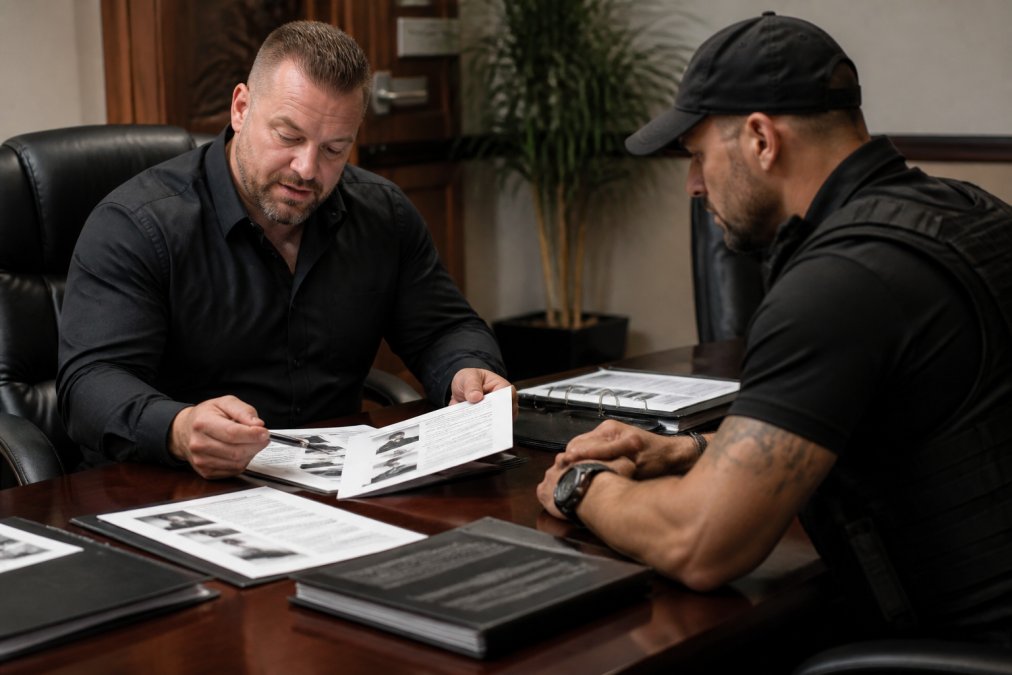
Selecting an executive protection provider requires systematic evaluation; the hiring process reveals whether a provider prioritizes your security or just closing a sale.
Step 1: Define Your Specific Threat Profile
Clearly articulate your threat type: kidnapping, extortion, stalking, competitive intelligence, workplace violence, or public exposure. Each demands different expertise. Be specific about industry, profile, travel patterns, and incidents prompting evaluation.
This clarity prevents purchasing unnecessary services and ensures you get relevant expertise. Low-threat executives may need only event security; those facing documented threats need immediate deployment capability.
Step 2: Evaluate Provider Vetting Standards (Not Just Their Credentials)
Most clients verify provider licenses but never verify how the provider vets its own officers. Poorly vetted personnel create more risk than protection.
Ask: What is your background investigation process (criminal history, employment verification, references, financial review, psychological evaluation)? Who conducts investigations, internal or third-party? What is your rejection rate? Do you conduct ongoing vetting? What are your disqualifying factors? Can you provide client references?
Request written vetting procedures. Refusal to share standards or claims of "proprietary" methods are warning signs.
Step 3: Assess Training Infrastructure and Continuous Development
Ask: What percentage hold Level IV certification? What is annual training requirement (minimum 40+ hours)? How often is scenario training conducted? What is officer turnover rate (above 30% is concerning)? Who conducts training, in-house or external? Can you provide curriculum documentation?
Step 4: Verify Licensing Directly with the State
Contact the Florida Department of Agriculture and Consumer Services, Division of Licensing directly to verify company and officer licenses, disciplinary actions, and suspensions. Search the state database online to eliminate unlicensed operator risk.
Step 5: Evaluate Technology and Communication Systems
Ask: What communication systems do you use (encrypted radio/secure apps)? Do you provide real-time GPS tracking? How quickly do you provide incident reports (within 24 hours)? What is your emergency escalation chain? Do you use proprietary or third-party systems?
Request a system demonstration. Outdated communication or manual documentation creates friction during critical moments.
Step 6: Assess Cultural Fit and Communication Style
Schedule a consultation to evaluate: Do they ask detailed questions or pitch generic packages? Do they explain recommendations or expect blind acceptance? Do they respect your input? Are they professional and courteous? Do they understand your industry and threats?
Excellent credentials with poor communication create friction; providers that listen carefully and respect input integrate smoothly.
Step 7: Request Client References and Industry Reputation
Contact client references in your industry and ask about responsiveness, officer judgment, incident handling, and whether they'd rehire.
Step 8: Evaluate Pricing Transparency and Service Models
Red Flags to Avoid
Walk away from providers that:
- Refuse to provide references or vetting documentation
- Cannot clearly explain their training standards or officer qualifications
- Pressure you to sign contracts without answering your questions
- Offer pricing that seems unrealistically low
- Have officers with questionable backgrounds or disciplinary histories
- Use outdated communication or tracking systems
- Cannot demonstrate knowledge of your specific threat type
- Are dismissive of your concerns or input
Why Response Time and Availability Matter
Response time during a security incident directly correlates with outcome severity. The difference between a four-hour response window and a 24-hour response window can determine whether a threat escalates into a crisis or gets contained early. This is why deployment speed matters more than many clients initially realize.
Frequently Asked Questions
What is included in executive protection services?
Executive protection services typically include close protection (bodyguard detail), threat assessment, secure transportation, access control, and crisis response. Providers conduct vulnerability assessments of your environment, develop customized security protocols, and maintain 24/7 availability. Many firms integrate digital-physical convergence tools like real-time tracking apps and emergency hotlines. The scope depends on your risk profile, a corporate executive may need vehicle security and event coverage, while a high-net-worth individual might require residential estate security and travel protection.
How much do executive protection services cost in Florida?
Pricing for executive protection services depends on deployment frequency, officer qualifications, whether armed or unarmed coverage is needed, and duration of service. Contact security consulting firms directly for custom quotes tailored to your specific threat assessment and operational requirements.
Are executive protection agents required to be licensed in Florida?
Yes. Security officers providing executive protection in Florida must hold a Class G (armed) or Class D (unarmed) license issued by the Florida Department of State, Division of Licensing. Armed officers require additional firearms certification. Reputable firms employ only state-certified professionals who maintain current credentials and pass background checks. Before hiring, verify that all personnel have valid licenses and that the agency carries appropriate General Liability insurance.
What is the difference between a security guard and executive protection?
Security guards typically monitor fixed locations, control access, and respond to incidents on-site. Executive protection officers provide personal close protection, conduct proactive threat mitigation, perform protective intelligence work, and travel with clients. EP specialists are trained in tactical response, crisis management, and threat assessment. They operate discreetly to maintain client privacy while remaining ready for emergencies. Executive protection requires higher-level training and situational awareness than standard guard services.